

In 2025, the landscape of cybersecurity is rapidly changing, and with it, the threats businesses face. Scattered Spider, a highly sophisticated cybercriminal group, has emerged as one of the most dangerous entities targeting industries that hold vast amounts of sensitive data. Insurance companies, in particular, are prime targets due to the nature of the data they manage. From personal health records to financial data, insurance companies hold valuable information that cybercriminals want to exploit. As the digital age continues to evolve, it’s essential for the insurance sector to understand the rising threats posed by Scattered Spider and take proactive steps to defend against them.
In this article, we will explore the top 10 ways Scattered Spider attacks your insurance company and provide effective strategies for defending your business from these evolving cyber threats.
Who Is Scattered Spider?
Scattered Spider is a cybercriminal group known for its sophisticated and persistent tactics. Operating globally, they are adept at exploiting vulnerabilities in industries with vast amounts of sensitive data. Initially emerging around 2022, Scattered Spider has grown in resources, capability, and reach. Their attacks are often highly targeted, leveraging social engineering, ransomware, advanced persistent threats (APTs), and credential stuffing techniques.
They primarily target industries like healthcare, finance, and insurance, all of which store large amounts of highly valuable personal and financial data. By breaching these industries, they can steal sensitive data, disrupt operations, and demand ransom, making them one of the most formidable threats in 2025.

2025 Cyber Threats: 10 Ways Scattered Spider Cyberattacks Threaten Your Insurance Company
Why Scattered Spider Targets the Insurance Industry
The insurance industry is an attractive target for cybercriminals due to the wealth of sensitive information it holds. Insurance companies process a diverse range of personal data, including:
- Personal Identification Information (PII): Names, addresses, dates of birth, etc.
- Financial Data: Bank details, credit card numbers, and transaction histories.
- Health Data: Especially important in the case of life and health insurance policies.
With this valuable data in hand, Scattered Spider can sell it on the dark web, demand ransom, or use it to commit fraud. The insurance industry’s complex regulatory environment and reliance on legacy systems make it an even more appealing target for cybercriminals.
Top 10 Ways Scattered Spider Attacks Your Insurance Company
1. Phishing & Spear-Phishing
Phishing remains one of the primary tactics Scattered Spider uses to gain access to insurance companies. These attacks often come in the form of emails that appear to come from trusted sources such as vendors, partners, or even internal team members. The goal is to trick recipients into clicking on malicious links or downloading infected attachments, thereby providing the attackers with login credentials, malware, or ransomware.
Spear-phishing, a more targeted form of phishing, is often used by Scattered Spider to focus on specific individuals, such as executives or employees with access to sensitive systems. This makes spear-phishing even more dangerous as the messages are highly personalized and harder to detect.
2. Ransomware and Data Encryption
Once inside the company’s network, Scattered Spider often deploys ransomware. This malware encrypts important files, making them inaccessible until a ransom is paid. Ransomware attacks can bring operations to a halt for days, weeks, or longer, especially if businesses lack an effective backup strategy or disaster recovery plan.
Insurance companies are particularly vulnerable as they store large amounts of confidential client data. Losing access to this data can have devastating consequences, including data loss, compliance issues, and reputation damage.
3. Advanced Persistent Threats (APTs)
APTs are long-term, stealthy attacks designed to infiltrate a company’s network and steal valuable data over time. Once Scattered Spider gains initial access, they embed themselves deep within the network, making it harder to detect their presence. This allows them to gather information gradually and maintain access, which is far more difficult to defend against.
4. Credential Stuffing and Insider Threats
Credential stuffing is a method in which Scattered Spider uses stolen passwords to gain access to multiple systems. These passwords are often obtained through data breaches and are used in automated attacks to crack multiple accounts. With a large number of employees, insurance companies are prime targets for credential stuffing attacks.
In addition to this, insider threats—whether malicious or accidental—further compromise security. Employees who misuse their access to sensitive data or fall victim to social engineering are often exploited by Scattered Spider.
5. Exploiting Legacy Systems
Despite technological advancements, many insurance companies still rely on legacy systems that were not designed to combat modern cyber threats. These outdated systems often lack the necessary security features, making them vulnerable to Scattered Spider’s attacks.
6. Cloud Infrastructure Vulnerabilities
As more insurance companies migrate to the cloud, the associated risks increase. Misconfigurations, weak access control, and lack of secure protocols can leave sensitive data exposed. With the growing reliance on cloud platforms, Scattered Spider has become increasingly adept at exploiting these vulnerabilities.
7. Weak Employee Training and Human Error
The human element remains one of the weakest links in any organization’s security chain. Lack of training and awareness often leads to employees falling for phishing emails or mishandling sensitive data. Scattered Spider capitalizes on this vulnerability through social engineering tactics.
8. Social Engineering Tactics
In addition to phishing, Scattered Spider uses other social engineering techniques to manipulate employees into disclosing confidential information or performing actions that compromise security. This could include pretexting, where an attacker impersonates a trusted figure to gain access, or baiting, where an attacker lures an employee into downloading a malicious file.
9. Data Breaches and the Dark Web
Once Scattered Spider has infiltrated an organization’s systems, they often steal sensitive data and sell it on the dark web. Insurance companies that store massive amounts of personal, financial, and health data are prime targets for this activity. Data breaches often result in long-term financial losses, regulatory penalties, and reputational damage.
10. Regulatory Non-Compliance
With evolving data protection regulations like CCPA, HIPAA and more non-compliance can have severe consequences for businesses. Cybercriminal groups like Scattered Spider exploit these gaps in security, knowing that companies struggling to meet regulatory standards are often the easiest targets.
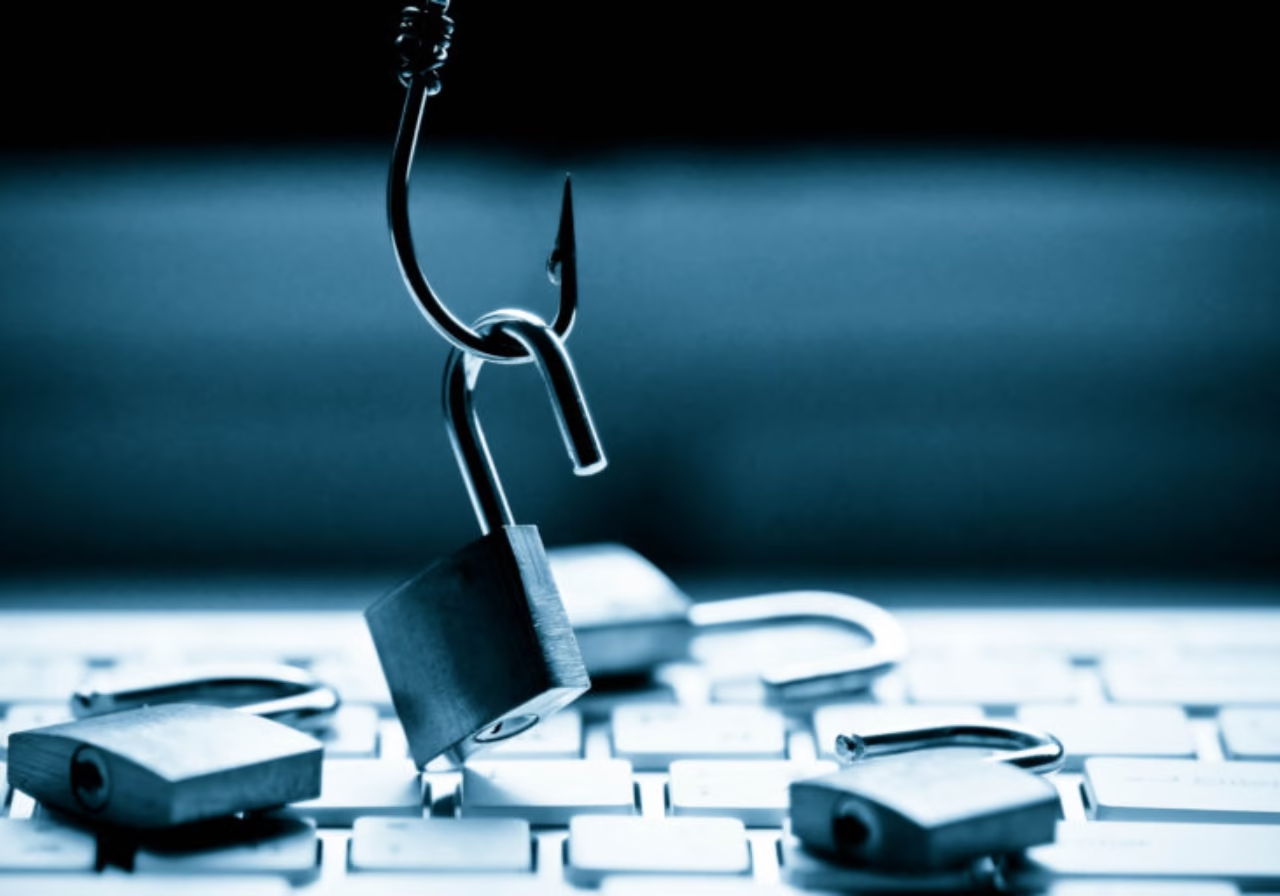
2025 Cyber Threats: 10 Ways Scattered Spider Cyberattacks Threaten Your Insurance Company
How to Defend Against Scattered Spider Attacks
Multi-layered Cybersecurity
A multi-layered cybersecurity strategy that combines multiple defensive measures, including firewalls, intrusion detection systems (IDS), endpoint protection, and data encryption, is essential for protecting against Scattered Spider attacks.
Employee Awareness and Training
Investing in regular cybersecurity training is crucial for all employees. Phishing attacks are often the entry point for these cybercriminal groups, and training can help employees recognize and report suspicious activities.
Cloud Security Best Practices
For insurance companies, securing cloud infrastructure is a must. This includes adopting strong access control, ensuring secure configurations, and implementing constant monitoring for abnormal activity.
Implementing Incident Response Protocols
A clear and effective incident response plan should be in place to mitigate the damage in the event of an attack. This plan should detail the necessary steps to contain the attack, notify stakeholders, and recover any lost data.
The Impact of Cyberattacks on Insurance Companies
The consequences of cyberattacks for insurance companies extend far beyond the initial financial loss. A data breach can result in a loss of customer trust, regulatory fines, and a permanent stain on the company’s reputation. For insurance companies, maintaining trust is paramount, and a breach can destroy years of goodwill with clients and partners.
Additionally, cyberattacks lead to increased operational costs as companies must invest in new technologies, conduct forensic investigations, and train employees in cybersecurity best practices. In extreme cases, insurance companies can face legal action from affected clients or partners.

2025 Cyber Threats: 10 Ways Scattered Spider Cyberattacks Threaten Your Insurance Company
VITG’s Approach to Defending Your Business
At Virtual IT Group (VITG), we specialize in helping insurance companies secure their IT infrastructure against threats like Scattered Spider. With over 35 years of industry experience, VITG offers comprehensive cybersecurity solutions customized to the unique goals of the insurance industry.
Our Key Cybersecurity Services Include:
- 24/7 Threat Monitoring: We provide continuous monitoring to detect and respond to threats in real time.
- Incident Response: In case of an attack, we have a rapid response team ready to minimize the damage.
- Data Encryption & Backup: Protect your sensitive data with encryption and secure backups to ensure recovery in case of an attack.
- Employee Training: We offer regular training to help your employees recognize phishing attempts and follow best practices for data security.
- Compliance Assistance: Our team ensures your business meets all regulatory requirements, reducing the risk of legal issues after a breach.
Conclusion
As Scattered Spider continues to refine its tactics, insurance companies must remain vigilant and proactive in defending against these evolving cyber threats. Investing in cybersecurity best practices, comprehensive security tools, and employee awareness is essential to safeguarding your business in the face of increasingly sophisticated attacks.
With VITG’s expert cybersecurity services, you can better prepare your insurance company for any threat, ensuring the protection of your sensitive data, your client’s trust, and your company’s future.