

What Is Proactive Network Monitoring and Why Does It Matter for Tampa Bay Businesses in 2026?
Proactive network monitoring is the continuous, automated surveillance of your entire IT infrastructure — routers, switches, servers, endpoints, and cloud services — to identify and resolve issues before they cause downtime or data loss. For Tampa Bay businesses navigating the increasingly hostile cybersecurity landscape of 2026, this approach has shifted from a luxury to a survival requirement.
Unlike reactive IT management, where your team scrambles to fix problems after users report them, proactive monitoring uses real-time telemetry, machine learning, and intelligent alerting to catch anomalies the moment they appear. The distinction is critical: reactive IT waits for the fire; proactive IT smells the smoke.
For Tampa and Tampa Bay SMBs, the ROI impact is substantial. Businesses in the region that invest in proactive IT typically reduce unplanned downtime by 70–85%, according to Gartner’s latest IT cost optimization research. Modern monitoring solutions go far beyond simple ping tests — they leverage AI-driven analytics, automated remediation workflows, and integrated threat intelligence feeds that legacy tools simply cannot match.
Reactive vs. Proactive: The Cost Difference
The average cost of IT downtime for small and mid-sized businesses now exceeds $9,000 per minute, according to Atlassian’s incident management data. For Tampa area businesses — particularly those in healthcare, logistics, and financial services — even a two-hour outage can translate to $50,000 or more in direct and indirect losses.
Reactive response times compound the damage. When your team only learns about a problem after a user complains, the average mean-time-to-resolution (MTTR) stretches to 3–5 hours. With proactive monitoring, issues are often resolved in under 30 minutes — sometimes before any employee notices a disruption.
The hidden costs of reactive IT management go deeper than downtime alone. They include lost customer trust, compliance penalties, overtime labor expenses, and the slow erosion of employee productivity that accumulates when systems are unreliable.
How Network Threats Have Evolved Since 2024
The threat landscape facing Tampa Bay businesses in 2026 looks dramatically different from just two years ago. Ransomware variants like those documented by CISA’s StopRansomware initiative now use AI-generated phishing lures tailored to specific industries and geographic regions, making Florida businesses a frequent target.
AI-powered cyber attacks have moved from theoretical concern to daily reality. Threat actors deploy machine learning to probe networks, rotate attack vectors in real time, and evade traditional signature-based defenses. SMBs without continuous monitoring are the easiest targets.
Compliance requirements have also tightened. Florida’s evolving data protection regulations, combined with updated federal standards for industries like healthcare and finance, mean that businesses across Hillsborough County face steeper penalties for breaches tied to inadequate monitoring. The old approach of annual security audits and basic antivirus simply does not meet 2026 standards.
The Specific Challenges Tampa Bay Businesses Face Without Network Monitoring
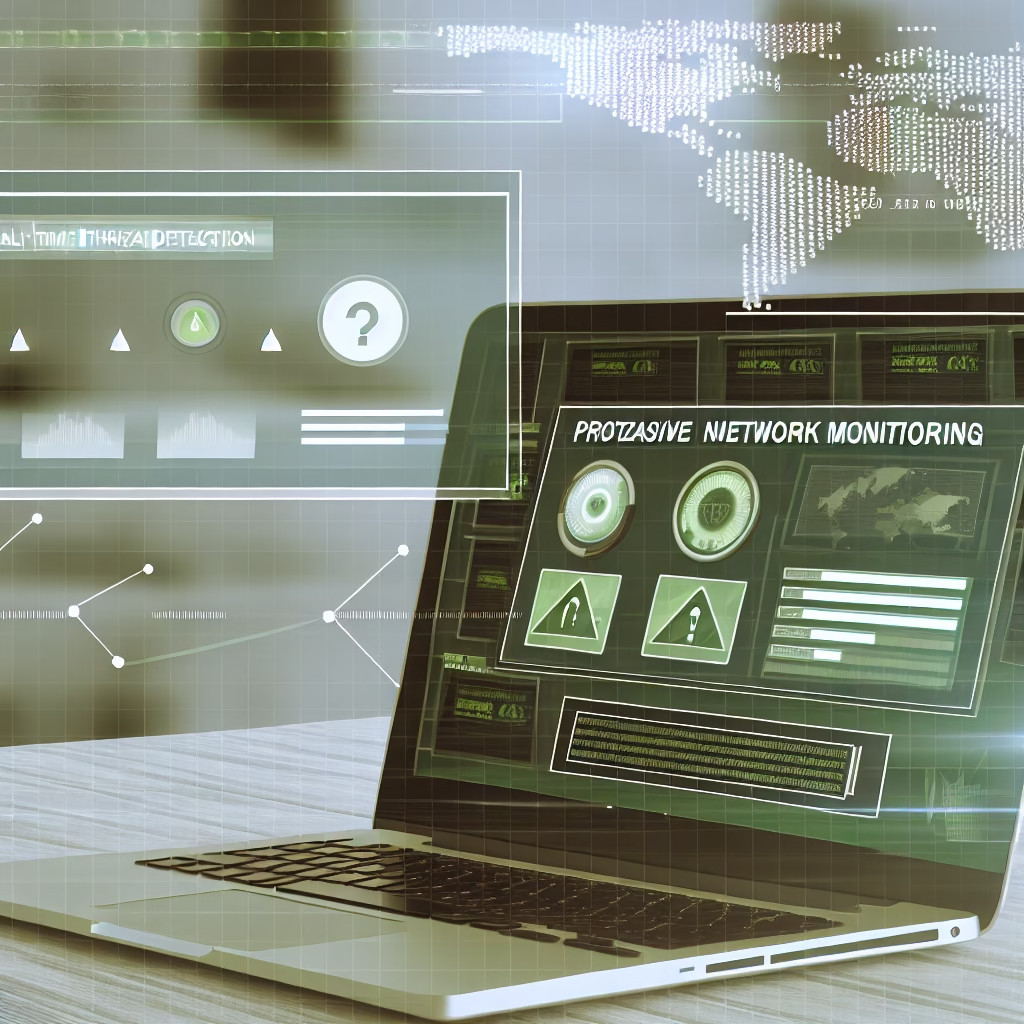
Tampa Bay businesses without proactive network monitoring face a unique combination of challenges driven by the region’s rapid economic growth, regulatory complexity, and industry diversity. Without continuous visibility into your network, these challenges compound silently until they become emergencies.
The Tampa Bay metro area continues to attract new businesses and expand existing ones, which puts immense strain on IT infrastructure that was never designed to scale this quickly. Florida’s regulatory environment — particularly for healthcare practices, financial firms, and logistics companies — adds layers of compliance requirements that demand documented, continuous monitoring.
Seasonal fluctuations from the tourism industry also create unpredictable demand spikes. Businesses supporting hospitality, retail, and event services in the Tampa Bay region see their network traffic surge during peak seasons, and without proactive capacity management, performance degrades exactly when it matters most. Supply chain vulnerabilities, particularly those connected to Port Tampa Bay operations, further increase the attack surface for businesses throughout the region.
Network Blind Spots in Growing Tampa Bay Organizations
As Tampa Bay organizations grow, network blind spots multiply. Undetected bandwidth consumption from unauthorized applications or misconfigured devices silently degrades performance across your entire infrastructure. We’ve seen this at client sites across Tampa Bay — a single misconfigured backup job consuming 80% of available bandwidth during business hours, invisible to everyone until employees start complaining about slow systems.
Shadow IT remains one of the most dangerous blind spots. Employees connecting personal devices, using unsanctioned cloud apps, or installing unauthorized software create entry points that no firewall can protect against if nobody is watching the internal network.
Hybrid and remote work — now standard for most businesses in Hillsborough County — adds another layer of complexity. Without monitoring, you have no visibility into how remote workers in Plant City, Temple Terrace, or Dover are connecting to your network, what devices they’re using, or whether their home networks are compromised. Multi-location organizations face these challenges at every site, with each office representing a potential weak link.
Compliance Risks Specific to Tampa’s Industries
Tampa Bay’s industry mix creates a concentrated compliance burden that demands proactive monitoring. Healthcare practices throughout the region must meet HIPAA requirements that mandate continuous access logging, encryption verification, and breach detection — all of which require active network monitoring to satisfy.
Retail and e-commerce businesses face PCI-DSS requirements that include network segmentation verification, real-time intrusion detection, and quarterly vulnerability scanning. Without proactive monitoring, passing a PCI audit becomes an expensive, last-minute scramble.
The Florida Information Protection Act (FIPA) imposes specific data breach notification requirements on businesses operating in the state, including strict timelines for reporting. Companies connected to Port Tampa Bay’s shipping and logistics ecosystem face additional federal compliance requirements related to critical infrastructure protection. In every case, proactive monitoring provides the documentation and detection capabilities these frameworks require.

How Proactive Network Monitoring Prevents Costly Downtime and Security Breaches
Proactive network monitoring prevents downtime and security breaches by detecting threats and infrastructure issues in their earliest stages — before they escalate into business-disrupting events. For Tampa Bay companies, where a single breach can cost hundreds of thousands of dollars and months of recovery time, this early detection capability is the difference between a minor alert and a major crisis.
The economics are straightforward. According to IBM’s Cost of a Data Breach Report, the average breach cost for U.S. businesses now exceeds $4.8 million. Businesses with proactive monitoring and automated response capabilities contained breaches 108 days faster on average, saving more than $1.4 million per incident. For Tampa Bay SMBs, even a fraction of those numbers represents an existential threat.
Early Detection of Network Anomalies
Modern proactive monitoring platforms use machine learning to establish baselines of normal network behavior and flag deviations instantly. If a workstation in your Tampa office suddenly begins communicating with an unfamiliar overseas server at 2 AM, the system identifies this anomaly within seconds — not days.
Malware detection has evolved beyond signature matching. Behavioral analysis identifies suspicious file modifications, lateral movement across network segments, and privilege escalation attempts that indicate active compromise, all before malware can spread to additional systems.
Unauthorized access attempts are logged, correlated, and blocked in real time. If someone attempts to brute-force a VPN credential or access restricted network segments without proper authorization, the monitoring platform triggers an alert and can automatically isolate the threat. Data exfiltration attempts — where attackers slowly siphon data from your network — are identified by unusual outbound traffic patterns that human administrators would never notice in time.
Preventing Downtime Before It Happens
Downtime prevention is where proactive monitoring delivers its most tangible ROI for Tampa Bay businesses. Capacity planning tools analyze bandwidth utilization trends and alert your team — or your managed services provider — before network saturation causes slowdowns.
Hardware failure prediction is another critical capability. By monitoring disk health indicators (SMART data), memory error rates, CPU temperatures, and power supply metrics, proactive monitoring platforms can predict hardware failures days or weeks in advance, giving you time to replace components during scheduled maintenance windows rather than during a Friday afternoon emergency.
Bandwidth optimization reduces congestion by identifying and prioritizing mission-critical traffic. When your VoIP calls are competing with large file transfers and software updates, intelligent monitoring ensures the right traffic gets priority. The result: businesses in Tampa typically achieve 99–99.9% uptime on mission-critical systems with proper proactive monitoring in place.
Local Angle: How Tampa Bay’s Business Environment Makes Monitoring Essential
Tampa Bay’s business environment creates specific conditions that make proactive network monitoring more critical here than in many other U.S. markets. The region’s rapid tech sector growth, diverse industry base, and geographic role in national logistics all contribute to an elevated risk profile that demands continuous network visibility.
The Tampa Bay tech sector has seen explosive growth, with startups and mid-market companies scaling quickly and often outpacing their IT infrastructure’s capacity. This rapid expansion — combined with the region’s role as a major financial services hub, healthcare center, and logistics corridor — creates a target-rich environment that cybercriminals actively exploit.
Tourism seasonality adds operational complexity that businesses in other markets don’t face. Hotels, restaurants, event venues, and the service businesses that support them across Hillsborough County experience dramatic network demand fluctuations that require adaptive monitoring and capacity management. Multi-office operations spanning Tampa, Plant City, Temple Terrace, and surrounding communities need unified visibility across all locations to maintain security and performance.
Tampa Bay’s Growing Cybersecurity Threat Landscape
Florida consistently ranks among the top five states for reported cybercrime incidents, according to the FBI’s Internet Crime Complaint Center (IC3). Tampa Bay’s concentration of port operations, financial institutions, healthcare systems, and defense contractors makes the region a high-priority target for both organized cybercrime groups and state-sponsored threat actors.
Ransomware gangs have increasingly shifted their focus from enterprise targets to mid-market businesses — companies with $5 million to $100 million in revenue that have valuable data but often lack the security infrastructure of larger organizations. We’ve observed this trend accelerating across our Tampa Bay client base, with attempted attacks increasing significantly year over year.
Local incident response resources, while improving, remain stretched thin. When a major breach hits, the businesses that recover fastest are those with proactive monitoring already in place — providing the forensic data, network segmentation, and automated containment that enable rapid response. Without these capabilities, recovery timelines extend from days to weeks or months.
What Should Tampa Bay Business Leaders Look for in a Network Monitoring Solution?
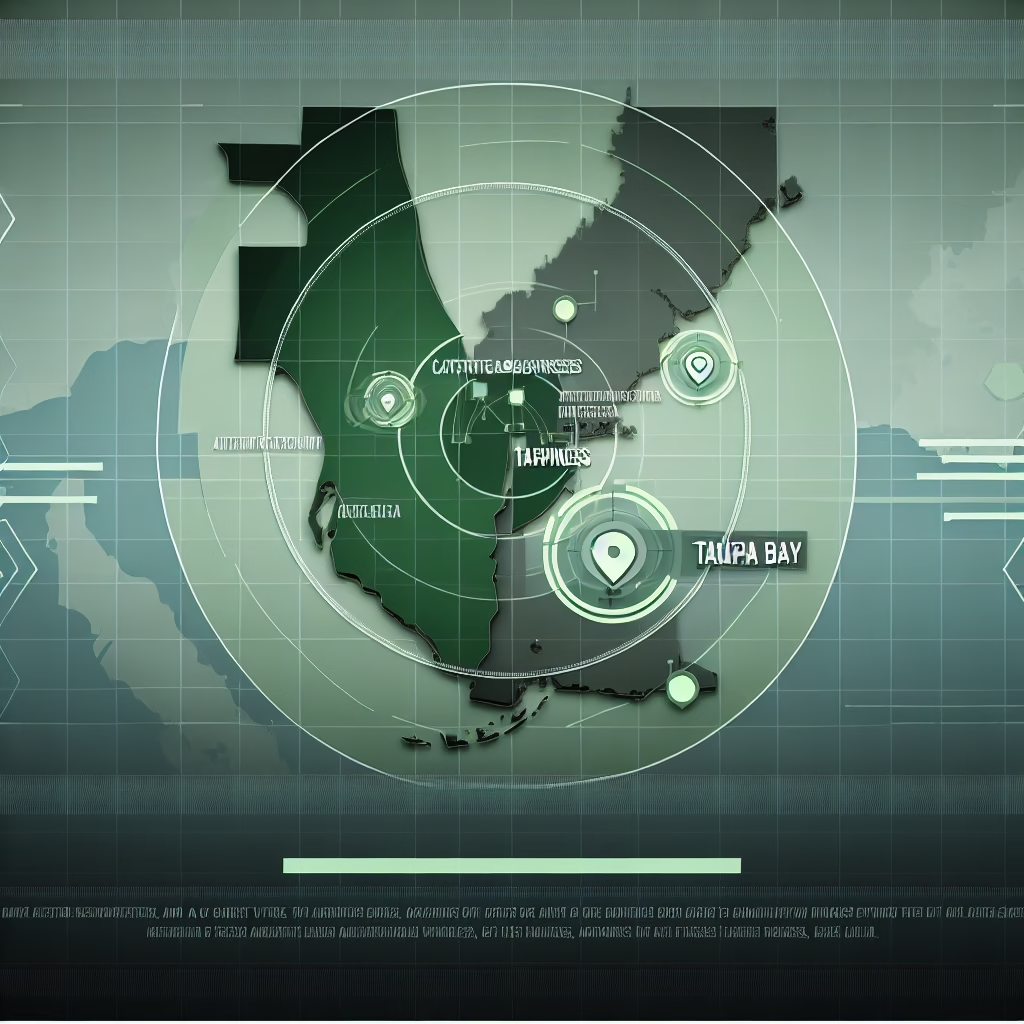
Tampa Bay business leaders evaluating network monitoring solutions should prioritize five key factors: comprehensive coverage, real-time alerting, compliance support, scalability, and local support capabilities. The right solution protects your business today while adapting as your organization grows.
Integration with your existing systems is essential. The best monitoring platforms work with your current firewalls, switches, servers, and cloud services without requiring a complete infrastructure overhaul. Vendor credentials matter — look for partnerships with major technology providers like Microsoft and Cisco, along with industry certifications from CompTIA that demonstrate verified expertise.
Critical Features for Your Tampa Area Business
At minimum, your network monitoring solution should provide 24/7/365 monitoring and alerting. Threats don’t respect business hours, and neither should your defenses. Every alert should be triaged by qualified analysts — automated alerts without human review generate noise, not protection.
Real-time dashboards and reporting give you and your leadership team instant visibility into network health, security posture, and performance metrics. The best solutions offer executive-level summaries alongside detailed technical data.
Integrated threat intelligence and vulnerability assessment capabilities ensure your monitoring stays current with the latest attack methods. Compliance reporting tailored to Florida regulations — including HIPAA, PCI-DSS, and FIPA — should be built in, not bolted on. And for busy Tampa Bay executives managing operations across multiple locations, mobile access to monitoring dashboards and alert notifications is not optional — it’s essential.
Choosing the Right Managed IT Services Partner in Tampa
The decision between a local Tampa Bay MSP and a national provider has significant implications for response times, service quality, and business understanding. A local partner like Virtual IT Group understands the specific challenges of operating in the Tampa Bay market — the regulatory landscape, the industry mix, the infrastructure realities of doing business in Florida.
Credentials matter. Look for CompTIA Partner status and Microsoft Partnership certifications as baseline qualifications. Beyond credentials, evaluate the MSP’s experience with your specific industry vertical. A provider with deep experience serving Tampa Bay healthcare practices, for example, brings compliance knowledge that a generalist cannot match.
SLA guarantees should be specific and measurable — not vague promises of “fast response.” Ask for documented response time commitments, escalation procedures, and uptime guarantees. Most importantly, confirm that your provider offers local support for emergency issues. When a critical system goes down at your Tampa office, you need a partner who can have an engineer on-site quickly, not a help desk agent three time zones away. Virtual IT Group delivers comprehensive managed IT services for Tampa Bay businesses with the local presence and expertise this region demands.
Getting Started with Proactive Network Monitoring in Tampa Bay
Implementing proactive network monitoring for your Tampa Bay business starts with a thorough assessment of your current infrastructure, followed by a phased deployment that minimizes disruption while delivering immediate security improvements. Most businesses in the Tampa area can achieve full monitoring coverage within 30–60 days.
Budget considerations are often the first concern for Tampa Bay SMBs. The good news is that proactive monitoring has become increasingly affordable, with most small and mid-sized businesses investing between $150 and $500 per month depending on network size and complexity. When weighed against the average cost of a single downtime incident or security breach, the investment typically pays for itself within the first quarter.
Quick wins come fast. Within the first week of deployment, most organizations discover previously unknown devices on their network, identify bandwidth bottlenecks, and uncover configuration vulnerabilities that represent immediate risk. These early findings alone often justify the investment.
The Network Assessment Process
Virtual IT Group’s network assessment process — which we offer as a free initial assessment for Tampa Bay businesses — follows a structured methodology designed to identify gaps, quantify risk, and prioritize remediation.
The assessment begins with a comprehensive discovery of your current monitoring capabilities (or lack thereof), identifying every device, connection, and service on your network. Next, our team conducts vulnerability scanning to identify exploitable weaknesses in your infrastructure, from unpatched systems to misconfigured firewalls.
A compliance audit evaluates your current posture against the specific regulations governing your industry in Florida. Finally, we deliver a prioritized set of recommendations ranked by risk severity and business impact, giving you a clear roadmap for implementation. Our team, with over 40 years of combined experience serving Tampa Bay businesses, has refined this process to deliver actionable results — not generic reports that collect dust.
Ready to see where your network stands? The first step is simple: schedule a free network assessment with Virtual IT Group and get a clear picture of your security posture, compliance gaps, and monitoring opportunities.
Frequently Asked Questions About Network Monitoring for Tampa Bay Businesses
How much does proactive network monitoring cost for Tampa Bay SMBs?
Most Tampa Bay small and mid-sized businesses invest between $150 and $500 per month for proactive network monitoring through a managed IT services provider. The exact cost depends on your network’s size, complexity, number of locations, and compliance requirements. Virtual IT Group offers customized monitoring packages designed for Tampa area businesses that typically pay for themselves within 3–6 months through prevented downtime, avoided security incidents, and reduced emergency IT spending. When you consider that a single hour of unplanned downtime can cost $9,000 or more, the monthly investment represents a fraction of the risk it mitigates.
Can a business in Plant City or Temple Terrace implement network monitoring without replacing existing IT infrastructure?
Yes — and this is one of the most common misconceptions we encounter. Modern network monitoring solutions are designed to integrate with your existing firewalls, servers, switches, and cloud services without requiring a rip-and-replace approach. Whether you’re running legacy equipment in a Plant City warehouse or managing a hybrid cloud environment from a Temple Terrace office, Virtual IT Group deploys monitoring agents and sensors that work alongside your current infrastructure. This approach protects your existing technology investments while providing the visibility and protection your business needs. Implementation typically takes 2–4 weeks with minimal disruption to daily operations.
What’s the typical ROI timeline for implementing proactive network monitoring?
Most Tampa Bay businesses see measurable return on investment within 3–6 months of deploying proactive network monitoring. The ROI comes from multiple sources: prevented downtime (the most immediately quantifiable), reduced security incident costs, improved employee productivity from more reliable systems, and avoided compliance penalties. Organizations with multiple locations across the Tampa Bay area or complex network environments often see returns even faster — sometimes within the first 90 days — because the assessment process alone typically uncovers critical vulnerabilities and performance issues that generate immediate savings when resolved.
How does network monitoring help with Florida compliance requirements like HIPAA?
Proactive network monitoring is a foundational component of HIPAA compliance for Tampa Bay healthcare providers. It provides the continuous access logging, real-time intrusion detection, and automated audit trail generation that HIPAA’s Security Rule requires. Virtual IT Group’s 24/7 network security monitoring and threat detection solutions generate the compliance reports that healthcare practices, dental offices, and medical facilities across Tampa Bay need for regulatory audits and breach investigations. Beyond HIPAA, monitoring supports PCI-DSS compliance for retail businesses and helps satisfy the Florida Information Protection Act’s requirements for data breach detection and notification.
What happens if network monitoring detects a security threat?
When our proactive monitoring platform detects a security threat, our 24/7 security operations center immediately initiates a structured response protocol. The affected system or network segment is isolated to prevent lateral spread, your designated contacts are alerted with a clear description of the threat and its severity, and our engineers begin remediation. For Virtual IT Group customers in Tampa Bay, initial response typically occurs within 15–30 minutes of threat detection — dramatically faster than the industry average. This rapid containment is what prevents a single compromised endpoint from becoming a network-wide breach that costs your business weeks of recovery and hundreds of thousands of dollars in damages.
Protect your Tampa Bay business with proactive network monitoring. Virtual IT Group has been helping businesses across Hillsborough County and the greater Tampa Bay area stay secure, compliant, and operational for over 40 years. Schedule a free 30-minute network assessment with our team today. We’ll identify vulnerabilities, compliance gaps, and opportunities to strengthen your security posture — with zero obligation. Contact Virtual IT Group at virtualitgroup.com to get started.