
Why Cybersecurity Matters More Than Ever for Plant City Businesses
Plant City businesses face a cybersecurity landscape in 2026 that is more dangerous, more targeted, and more costly than ever before. As one of the Tampa Bay region’s most vital economic hubs—anchored by agriculture, food processing, and small manufacturing—Plant City has become a magnet for cybercriminals who see smaller operations as easy targets with valuable data.
Florida ranks among the top five states for ransomware attacks, and Hillsborough County businesses are squarely in the crosshairs. According to the Cybersecurity and Infrastructure Security Agency (CISA), ransomware groups increasingly target agriculture and manufacturing sectors because these industries rely on operational uptime and are more likely to pay a ransom to avoid disruption. For Plant City’s thriving strawberry industry, food processing plants, and the small manufacturers that support them, a single cyberattack can halt operations for days or weeks. Learn more about cybersecurity upgrade guide for Sun City Center businesses.
The good news is that prevention is dramatically less expensive than recovery. Understanding the threat landscape and taking proactive steps now will keep your business running, your data safe, and your customers’ trust intact.
The Rising Threat to Plant City’s Business Community
Plant City’s core industries—agriculture, food processing, and small-scale manufacturing—are among the most targeted sectors nationwide in 2026. These businesses often run legacy equipment, depend on supply chain connectivity, and operate with lean IT resources, making them attractive to threat actors.
Regional cyber incidents affecting businesses in nearby Valrico and Seffner have underscored how quickly an attack can spread through interconnected supply chains. When one vendor is compromised, every business in the chain becomes vulnerable. We’ve seen this firsthand working with clients across the Tampa Bay area.
Florida’s regulatory landscape adds another layer of urgency. The Florida Information Protection Act (FIPA) requires businesses to notify affected individuals within 30 days of a data breach—one of the tightest windows in the country. Non-compliance carries significant penalties, making proactive cybersecurity not just smart practice but a legal necessity for Plant City businesses.
Real Cost of a Data Breach vs. Prevention Investment
The average cost of a data breach for small and midsize businesses in 2026 exceeds $165,000, according to IBM’s Cost of a Data Breach Report. For a Plant City SMB with 20 to 50 employees, that figure can represent months of revenue—or even a fatal blow to the business.
Rather than navigating these complex threats alone, many Plant City business owners partner with professional cybersecurity consultancy services to develop customized defense strategies that fit their industry and budget.
If your Plant City business lacks in-house IT expertise, connecting with expert cybersecurity consultants in nearby Valrico can help you build a defense strategy tailored to your industry’s specific vulnerabilities.
But the ransom payment itself is only part of the story. Hidden costs include business downtime, lost customer trust, regulatory fines under FIPA, legal fees, forensic investigation, and the long-term reputational damage that drives clients to competitors. Many small businesses in Hillsborough County that experience a significant breach never fully recover.
By contrast, managed security services for a Plant City SMB typically cost between $800 and $3,000 per month—a fraction of what a single incident would cost. The return on investment is clear: every dollar spent on prevention saves an estimated $10 to $15 in breach recovery costs.
What Are the Top Cybersecurity Threats Facing Plant City SMBs?
Plant City small businesses in 2026 face four primary cybersecurity threats: ransomware, phishing and social engineering, supply chain attacks, and cloud misconfigurations. Understanding each threat is the first step toward building a defense strategy that actually works for your business.
The threat landscape has evolved significantly in recent years. Attackers no longer rely on brute-force methods alone—they use AI-generated phishing emails, exploit supply chain relationships, and target cloud infrastructure that many businesses migrated to without adequate security planning.
Ransomware: The #1 Threat to Plant City Businesses
Ransomware remains the single most destructive cybersecurity threat facing Plant City businesses in 2026. Agricultural and manufacturing operations are prime targets because they cannot afford extended downtime during harvest seasons or production cycles. Attackers know this and calibrate their ransom demands accordingly.
Ransomware typically enters a business network through a phishing email, a compromised remote access tool, or an unpatched vulnerability. Once inside, it encrypts critical files and demands payment—usually in cryptocurrency—for the decryption key. We’ve worked with businesses across the Tampa Bay area where a single employee clicking one malicious link brought an entire operation to a standstill.
A Plant City food processing company we assisted (details anonymized) lost three full days of production after ransomware encrypted their order management and logistics systems. The total cost, including lost revenue and recovery, exceeded $200,000—all because one employee opened what appeared to be a routine invoice email.
Phishing, Social Engineering, and Email Threats
Phishing attacks in 2026 are vastly more sophisticated than the obvious scam emails of years past. Attackers now use AI tools to craft highly personalized spear-phishing messages targeting Plant City business owners, office managers, and accounting staff by name, referencing real vendors, real invoices, and real project details.
Your employees remain the most vulnerable link in your cybersecurity chain. Even technically savvy team members can be fooled by a well-crafted email that mimics a message from a trusted supplier or a local Hillsborough County government agency. Social engineering exploits human trust, not technical weaknesses.
Business Email Compromise (BEC) attacks—where an attacker impersonates a CEO or vendor to redirect payments—are on the rise across the Tampa Bay region. These attacks cost U.S. businesses billions annually, and Plant City’s close-knit business community, where relationships are personal and trust is high, can ironically make these attacks more effective.
Cloud and Remote Work Vulnerabilities
The shift to cloud-based tools and remote work arrangements created new security gaps that many Plant City businesses have yet to close. Misconfigured cloud storage—such as an Amazon S3 bucket or Microsoft 365 SharePoint site left publicly accessible—is one of the most common causes of data exposure in 2026.
Unsecured VPN connections and weak access controls compound the problem. When employees in Riverview or Seffner connect to your Plant City office network from home without proper security protocols, every connection point becomes a potential entry for attackers.
The NIST Cybersecurity Framework provides clear guidance on securing cloud environments and remote access, and it’s the foundation we use when building security architectures for Tampa Bay businesses of all sizes.
6 Essential Cybersecurity Tips for Protecting Your Plant City Business
Protecting your Plant City business from cyber threats in 2026 requires a layered approach that combines technology, training, and planning. These six essential cybersecurity tips form what we call Virtual IT Group’s 6-Layer Defense Framework for Tampa Bay SMBs—a practical, proven methodology we’ve refined over four decades of serving the region.
Implement Multi-Factor Authentication (MFA) Across All Systems
Multi-factor authentication is the single most effective security control you can deploy today. According to Microsoft’s security research, MFA blocks over 99% of automated account compromise attempts. For Plant City businesses, that means dramatically reducing the risk of stolen credentials being used to access your systems. Learn more about multi-factor authentication guide.
Every business application—email, accounting software, cloud storage, remote desktop—should require MFA. Modern solutions like Microsoft Authenticator or hardware security keys are cost-effective and easy for employees to use. Our team typically rolls out MFA for a 25-person Plant City office in less than a day with minimal workflow disruption.
If you only implement one security measure from this entire list, make it MFA. It’s the highest-impact, lowest-cost step you can take right now.
Establish a Security Awareness Training Program
Technology alone cannot protect your business if your employees don’t know how to recognize threats. A structured security awareness training program—including monthly phishing simulations—transforms your team from your weakest link into your first line of defense.
Effective training goes beyond annual compliance checkboxes. Plant City businesses should run simulated phishing campaigns every month, provide brief (5-10 minute) quarterly training modules, and create a culture where employees feel comfortable reporting suspicious emails without fear of blame.
Florida businesses with compliance obligations—particularly those in food processing subject to FDA regulations—often need documented training records. A managed training program from a provider like Virtual IT Group ensures you meet those requirements while genuinely reducing your human risk factor.
Maintain Regular Backups and Disaster Recovery Plans
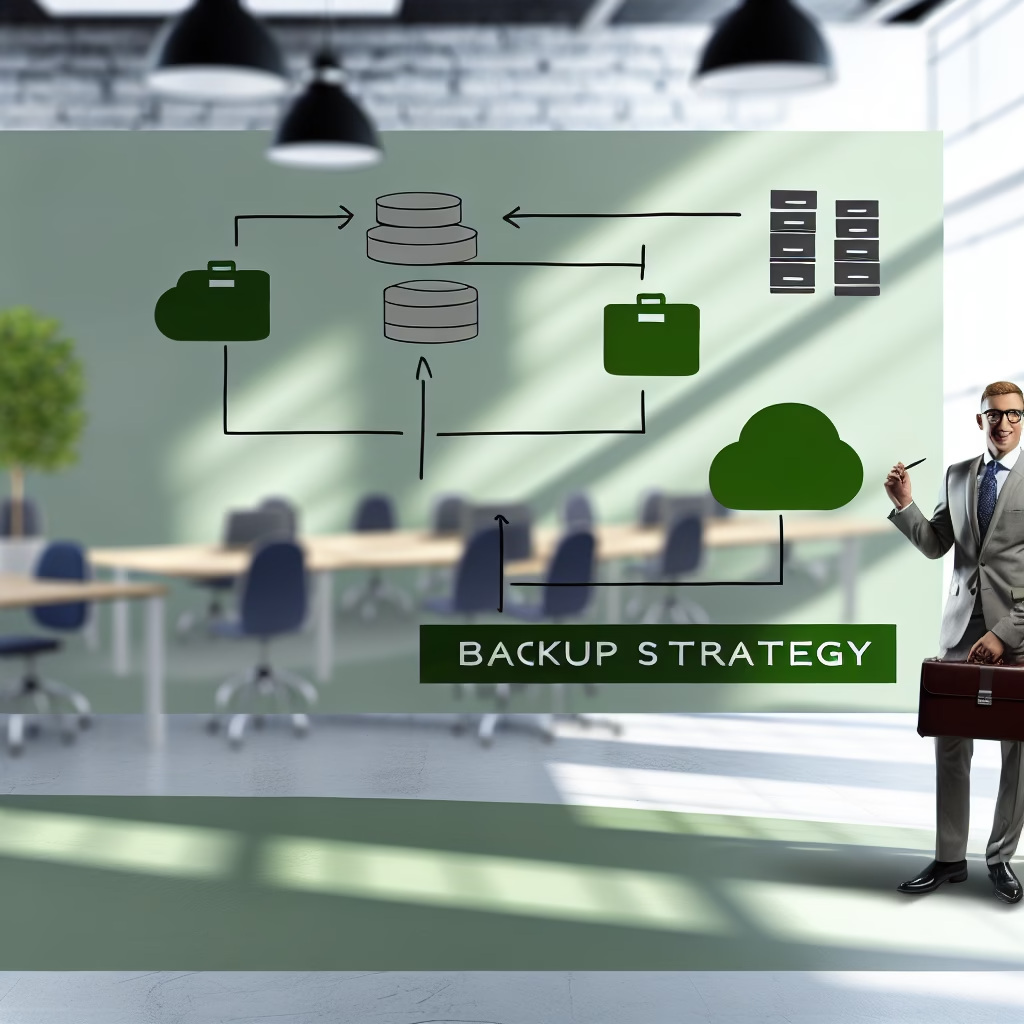
Every Plant City business should follow the 3-2-1 backup rule: maintain at least three copies of your data, stored on two different types of media, with one copy stored offsite or in the cloud. This strategy ensures that even if ransomware encrypts your primary systems, you can recover without paying a ransom.
But backups are worthless if they don’t actually work when you need them. We recommend testing your recovery procedures at least quarterly. Restore a sample set of files, verify database integrity, and time the process. Many businesses we’ve assessed in Hillsborough County discover during testing that their backups were incomplete or corrupted—far better to discover that in a test than during an actual emergency.
Your disaster recovery plan should document exactly who does what, in what order, when systems go down. Assign roles, establish communication protocols, and keep printed copies accessible—because during a cyberattack, your digital documents may be inaccessible.
Deploy Managed Patch Management and Vulnerability Scanning
Unpatched software is one of the most exploited attack vectors in 2026. Zero-day vulnerabilities—flaws discovered and exploited before vendors release patches—are increasingly common, but the majority of successful attacks exploit known vulnerabilities that simply haven’t been patched yet.
Automated patch management ensures your operating systems, applications, and firmware receive updates promptly without disrupting business operations. For Plant City businesses running manufacturing equipment or agricultural technology, this includes operational technology (OT) systems that are often overlooked in traditional IT patching schedules.
Vulnerability scanning should occur at least monthly, with automated scans supplemented by professional cybersecurity assessment and penetration testing on a quarterly or annual basis. This combination identifies weaknesses before attackers do.
Segment Your Network and Enforce Access Controls
Network segmentation separates your business systems into isolated zones so that a breach in one area cannot easily spread to the rest of your network. For a Plant City manufacturing business, this means your production floor systems, office workstations, and guest Wi-Fi should all operate on separate network segments.
Combine segmentation with the principle of least privilege: every employee should have access only to the systems and data they need for their specific role. When a compromised account can only reach a limited portion of your network, the potential damage from any single attack is drastically reduced.
Build and Test an Incident Response Plan
An incident response plan documents exactly how your business will detect, contain, and recover from a cybersecurity event. Plant City businesses that have a tested incident response plan reduce their average breach recovery time by over 50%, according to industry benchmarks.
Your plan should identify your response team (internal and external), define escalation procedures, establish communication templates for customers and regulators, and include contact information for your managed security monitoring and threat detection provider. Review and rehearse the plan at least twice per year.
Cybersecurity Challenges Specific to Brandon and the Tampa Bay Area
Brandon and the broader Tampa Bay region face cybersecurity challenges shaped by the area’s unique economic profile, rapid growth, and industry mix. Businesses in Brandon benefit from understanding the regional threat landscape because attackers often target geographic clusters—when one local business is compromised, nearby organizations face elevated risk.
Tampa Bay’s economic boom has attracted both legitimate business growth and increased attention from cybercriminal organizations. The region’s mix of agriculture, healthcare, logistics, and professional services creates a diverse attack surface that threat actors exploit with tailored campaigns.
Plant City’s Agricultural and Manufacturing Industry Risks
Plant City’s agricultural sector depends heavily on operational technology (OT)—automated irrigation systems, cold storage controls, processing line equipment, and logistics tracking. These systems were often designed for reliability, not security, and many run outdated software that no longer receives security patches.
Supply chain security is a critical concern across Hillsborough County. A cyberattack on a single seed supplier, packaging vendor, or logistics provider can cascade through the entire agricultural value chain. Businesses in Plant City, Valrico, and the surrounding area are interconnected in ways that create shared vulnerability.
We’ve worked with agricultural operations that had SCADA systems accessible from the public internet with default passwords still in place. Securing these legacy systems—through network segmentation, access controls, and monitoring—is essential for protecting Plant City’s economic backbone.
Florida-Specific Compliance and Regulatory Requirements
Florida’s regulatory environment places specific obligations on businesses that handle personal data, agricultural records, and food safety information. FIPA requires breach notification within 30 days and mandates reasonable security measures—a standard that is increasingly interpreted to include MFA, encryption, and regular security assessments.
Food processing businesses in Plant City may also need to comply with FDA Food Safety Modernization Act (FSMA) requirements that now include cybersecurity provisions for supply chain integrity. Florida’s SB 262, which expanded data privacy protections, adds another compliance layer that businesses must navigate.
Compliance isn’t just a checkbox—it’s a framework that, when implemented properly, genuinely reduces your breach risk. Businesses that align their security practices with FIPA, FSMA, and NIST frameworks are statistically less likely to experience a significant breach. Virtual IT Group helps Plant City and Brandon businesses map their compliance requirements and build security programs that satisfy regulators while actually protecting operations.
When Should You Partner With a Managed Security Provider in Plant City?
Plant City businesses should partner with a managed security provider when their cybersecurity needs exceed what their current team can handle—and for most SMBs with fewer than 100 employees, that point has already arrived. The complexity of the 2026 threat landscape makes DIY security a losing proposition for businesses without dedicated security staff.
Red Flags That It’s Time to Upgrade Your Security Posture
If any of the following apply to your Plant City business, it’s time to engage a professional managed security provider:
- No formal incident response plan: You have no documented procedure for what happens when (not if) a security event occurs.
- No regular security assessments: You haven’t conducted a vulnerability scan or penetration test in the past 12 months.
- Limited or no dedicated IT security staff: Your “IT person” handles everything from printer jams to firewall configuration.
- Previous breach attempts or suspicious activity: You’ve noticed unusual login attempts, unexpected system behavior, or phishing emails getting through to staff.
- Compliance gaps: You’re unsure whether your business meets FIPA, FSMA, or industry-specific security requirements.
Any one of these red flags warrants a professional assessment. Multiple flags indicate urgent risk that demands immediate attention.
The Value of Managed Security Services for Plant City SMBs
Managed security services from a provider like Virtual IT Group deliver enterprise-grade protection at a fraction of the cost of building an internal security team. Hiring a single full-time cybersecurity analyst in the Tampa Bay market costs $85,000 to $120,000 annually in salary alone—and one person cannot provide 24/7 coverage.
With managed IT services for small businesses, you gain round-the-clock threat monitoring and detection, proactive vulnerability management, rapid incident response, and ongoing compliance support. Your security budget becomes predictable—a fixed monthly cost rather than the devastating surprise of an unplanned breach.
As a Microsoft Partner and CompTIA Partner, Virtual IT Group brings credentialed expertise and vendor relationships that directly benefit our Plant City and Brandon-area clients. Our team has served the Tampa Bay region for over 40 years, and we understand the specific industries, regulations, and risks that define this market.
FAQ: Cybersecurity Questions Plant City Business Owners Are Asking
What does managed cybersecurity cost for a small business in Plant City?
Managed security services for Plant City SMBs typically range from $800 to $3,000 per month depending on company size, industry vertical (agricultural and food processing businesses often require more extensive monitoring), and compliance requirements. Virtual IT Group provides transparent, customized pricing based on a thorough assessment of your specific risk profile, number of endpoints, and regulatory obligations. This investment is a fraction of the average $165,000+ cost of a data breach, making it one of the most cost-effective business decisions you can make.
How often should Plant City businesses conduct security assessments?
Industry best practice from frameworks like NIST recommends at minimum an annual vulnerability assessment and penetration test. However, Plant City businesses in regulated industries—particularly agriculture, food processing, and manufacturing—should conduct assessments quarterly to stay ahead of evolving threats and maintain compliance. Virtual IT Group includes regular assessments as part of our managed security packages, so you’re continuously evaluated rather than relying on a single annual snapshot that can become outdated within weeks.
What cybersecurity compliance does a Plant City food processing business need?
Beyond Florida’s FIPA, food processing businesses in Plant City must comply with FDA FSMA cybersecurity provisions related to supply chain integrity and record-keeping. Florida’s SB 262 expanded data privacy protections that apply to businesses handling consumer information. Depending on your operations, HIPAA requirements may also apply if you manage employee health data. Virtual IT Group specializes in mapping compliance frameworks for Tampa Bay’s industrial sector, ensuring you meet all applicable standards without duplicating effort or overspending on unnecessary controls.
Can a small Plant City business handle cybersecurity without an IT team?
While basic security hygiene—strong passwords, software updates, cautious email behavior—is important and something every employee should practice, comprehensive cybersecurity in 2026 requires specialized expertise that goes far beyond what a non-technical team can manage. Threat detection, incident response, compliance management, and vulnerability analysis demand dedicated tools and trained professionals. Managed IT services providers like Virtual IT Group serve as your external security team, delivering 24/7 monitoring, rapid threat response, and proactive risk management without the overhead of hiring full-time cybersecurity staff.
What should Plant City businesses do if they’ve already been hit by ransomware?
If your business is experiencing an active ransomware attack, immediately isolate affected systems by disconnecting them from the network—do not power them off, as this can destroy forensic evidence. Contact law enforcement (the FBI’s Internet Crime Complaint Center and local FDLE) and engage a professional incident response team immediately. Virtual IT Group’s incident response team serves Plant City, Riverview, Valrico, and surrounding communities with rapid on-site and remote support to contain the attack, assess the damage, recover your data from backups, and build enhanced security architecture to prevent future incidents. Do not pay the ransom without professional guidance—paying does not guarantee data recovery and may fund further criminal activity.
Protect Your Plant City Business With Expert Cybersecurity Support
The cybersecurity threats facing Plant City small businesses in 2026 are real, growing, and specifically targeting the industries that drive our local economy. From ransomware attacks on agricultural operations to sophisticated phishing campaigns aimed at business owners in Brandon and across Hillsborough County, the risks demand a proactive, professional response.
You don’t have to face these threats alone. Virtual IT Group has served the Tampa Bay region for over 40 years, and our team understands the unique challenges that Plant City businesses face—from agricultural OT security to FIPA compliance to protecting the supply chains that connect our community.
Ready to protect your business? Schedule a free cybersecurity assessment with Virtual IT Group and get a personalized security roadmap tailored to your Plant City business. With our Microsoft and CompTIA partnerships, 24/7 monitoring capabilities, and deep local expertise, we’ll help you build a defense that keeps your operations running and your data secure—today and into the future.