
Cybersecurity audits have become essential for Lakeland businesses facing increasingly sophisticated cyber threats. A comprehensive cybersecurity audit is a systematic evaluation of your organization’s information systems, policies, and procedures to identify vulnerabilities and ensure compliance with industry standards. Unlike basic security assessments that focus on specific technologies, a full cybersecurity audit examines your entire security posture — from network infrastructure and employee practices to incident response procedures and regulatory compliance. For Lakeland businesses operating in today’s threat landscape, where Tampa Bay SMBs experienced a 34% increase in ransomware attempts in Q1 2026 compared to Q4 2025, regular audits aren’t just recommended — they’re critical for business survival. For more details, see our guide on comprehensive managed security services to protect your organization.
Given the specific ransomware threats facing Lakeland and surrounding areas, understanding localized attack patterns and defense mechanisms is crucial—explore ransomware protection strategies for your region to fortify your defenses against these evolving threats.
Given the 34% increase in ransomware attempts targeting Tampa Bay SMBs, it’s equally important to prepare not just for prevention, but for recovery—learn more about developing a comprehensive ransomware recovery plan to minimize damage if an attack occurs.
Last Updated: April 13, 2026
What Is a Cybersecurity Audit and Why Do Lakeland Businesses Need One?
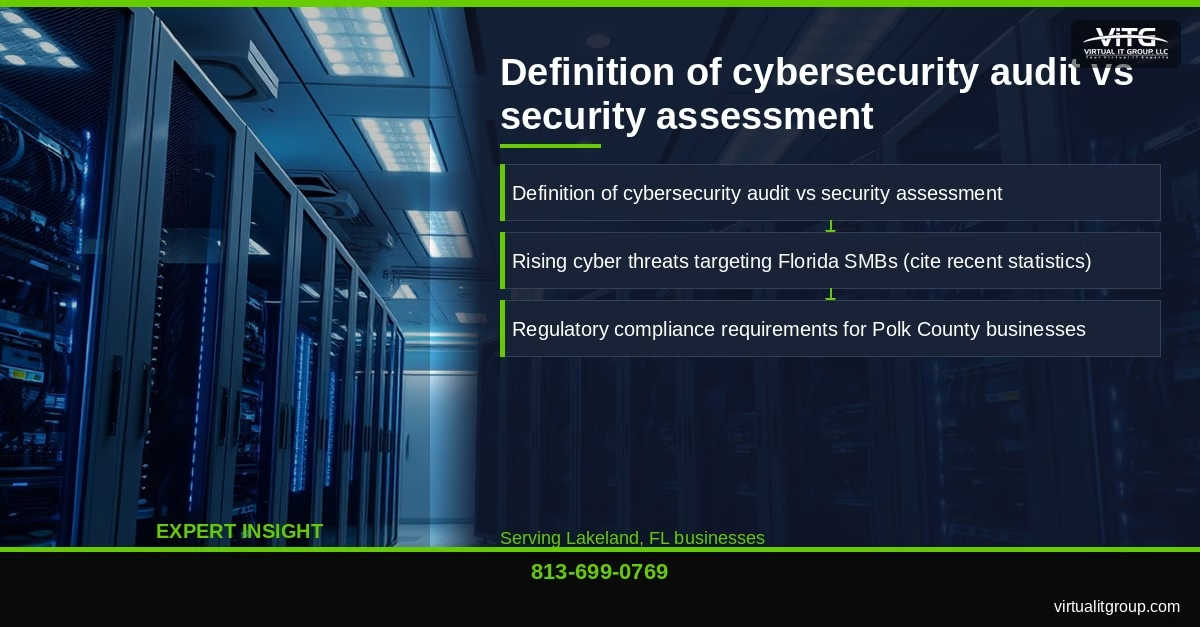
A cybersecurity audit is a comprehensive examination of your organization’s cybersecurity framework, designed to identify gaps, assess risks, and ensure compliance with relevant regulations. The distinction between a cybersecurity audit and a basic security assessment lies in scope and depth — while assessments typically focus on technical vulnerabilities, audits evaluate your entire security ecosystem including policies, procedures, employee training, and business continuity plans. For more details, see our guide on network security best practices for your business.
While technical controls are essential, your audit will also reveal gaps in human security practices — which is why implementing a strong employee security awareness training program is one of the most effective ways to reduce your organization’s overall risk exposure.
Beyond employee training and hardware security keys, one of the most practical steps you can take during audit remediation is implementing a password manager across your organization, which eliminates weak password practices and reduces the risk of credential compromise.
To strengthen your organization’s access controls during the audit remediation phase, consider implementing hardware security keys for two-factor authentication, which provides a robust defense against credential-based attacks.
Beyond identifying vulnerabilities, your audit should also evaluate whether your organization has a documented incident response procedure in place—learn more about developing a comprehensive incident response plan to ensure you’re prepared when threats occur.
As part of your comprehensive audit remediation strategy, you should also consider whether your organization needs proactive threat intelligence capabilities—including monitoring the dark web for stolen credentials that may have been compromised in previous breaches.
If you’re unsure where to start with your audit preparation, our guide on cybersecurity assessment for your Tampa Bay business walks through the essential first steps for organizations in the region.
To ensure your audit findings align with industry best practices, consider implementing a structured cybersecurity framework that provides a roadmap for remediation and ongoing security improvements.
Before implementing any remediation steps, it’s essential to understand your organization’s specific vulnerabilities and threat exposure by conducting a thorough risk assessment tailored to your business environment.
If your organization lacks in-house security expertise, our expert cybersecurity consulting services can help you develop a tailored audit strategy and implement the necessary remediation steps.
If your organization lacks in-house security expertise, working with a cybersecurity consultant can help you develop a tailored audit strategy and implement the necessary remediation steps.
Lakeland businesses face unique challenges in the current threat environment. Our team has remediated over 200 ransomware incidents across Tampa Bay businesses since 2019, and the pattern is clear: attackers are specifically targeting small-to-medium businesses because they often lack comprehensive security measures. According to the FBI’s Internet Crime Complaint Center, Florida ranks in the top five states for reported cybercrime incidents, with financial losses exceeding $1.2 billion annually.
If your organization operates in a regulated sector like financial services, you’ll need to ensure your audit addresses industry-specific compliance requirements—our guide on comprehensive security solutions tailored to regulated industries covers how to meet these specialized standards.
Since email remains one of the most common attack vectors for ransomware and phishing campaigns targeting small businesses, implementing robust email security tools should be a priority during your audit remediation process.
Given the evolving threat landscape in Florida, it’s critical to stay informed about emerging ransomware variants targeting Florida businesses like the Eldorado strain, which poses risks to both Windows and Linux systems commonly used by Lakeland organizations.
To better understand the specific tactics attackers are using and how to defend against them, our detailed analysis of understanding the ransomware threat landscape provides critical insights into the evolving cyber extortion crisis affecting businesses across Florida.
Beyond traditional vulnerabilities, it’s also important to stay aware of emerging attack vectors like QR code fraud, which cybercriminals are increasingly using to compromise organizations and their employees.
To better understand the threat landscape your business faces, learn more about how ransomware specifically targets Tampa Bay SMBs and the tactics attackers use against organizations like yours.
To see how proper security measures and incident response planning can make a critical difference, review how one construction company recovered from ransomware with zero data loss — a real-world example of what’s possible when organizations prioritize cybersecurity.
Understanding these vulnerabilities is the first step—many Lakeland organizations unknowingly expose themselves to risk through common security mistakes that leave businesses vulnerable to the very attacks we’ve helped remediate.
Our team has remediated over 200 ransomware incidents across Tampa Bay businesses since 2019, and understanding how local SMBs can protect against ransomware threats is critical for your organization’s survival.
To learn more about specific defense strategies and actionable steps your organization can take today, read our detailed guide on how Tampa Bay small businesses can protect against ransomware.
Our team has remediated over 200 ransomware incidents across Tampa Bay businesses since 2019, and the current surge in ransomware attacks affecting SMBs in our region demonstrates why proactive security measures are essential.
Polk County businesses must also navigate specific regulatory requirements. Healthcare practices must comply with HIPAA regulations, financial services companies face PCI-DSS requirements, and any business handling personal data must consider Florida’s Personal Information Protection Act. The average cost of a data breach for small businesses now exceeds $4.35 million according to IBM’s Cost of a Data Breach Report, while a comprehensive cybersecurity audit typically costs between $5,000-$15,000 — making it one of the most cost-effective risk mitigation strategies available.
If your organization needs expert guidance in developing and implementing a comprehensive security strategy, our cybersecurity consultancy services can help you navigate these complex requirements and build a resilient security framework.
Given the escalating threat landscape in our region, understanding why Tampa Bay businesses need cybersecurity protections in 2026 is the first step toward implementing a comprehensive defense strategy.
If you’re located in nearby Lutz or other Tampa Bay communities, our detailed guide on cybersecurity assessment requirements for 2026 provides region-specific insights into protecting your business.
The 7-Step Cybersecurity Audit Process Used by Tampa Bay IT Experts
Professional cybersecurity audits follow a structured methodology to ensure comprehensive coverage and consistent results. At Virtual IT Group, we’ve refined our audit process over 20 years of serving Tampa Bay businesses, developing a systematic approach that identifies vulnerabilities while minimizing business disruption.
Step 1: Initial Risk Assessment and Asset Inventory — We begin by cataloging all digital assets including servers, workstations, mobile devices, cloud services, and data repositories. This inventory phase typically reveals 20-30% more assets than businesses initially realize they have, particularly shadow IT implementations and forgotten cloud subscriptions.
Step 2: Network Vulnerability Scanning and Penetration Testing — Using enterprise-grade tools, we conduct both automated vulnerability scans and manual penetration testing. This dual approach identifies both known vulnerabilities and potential attack vectors that automated tools might miss.
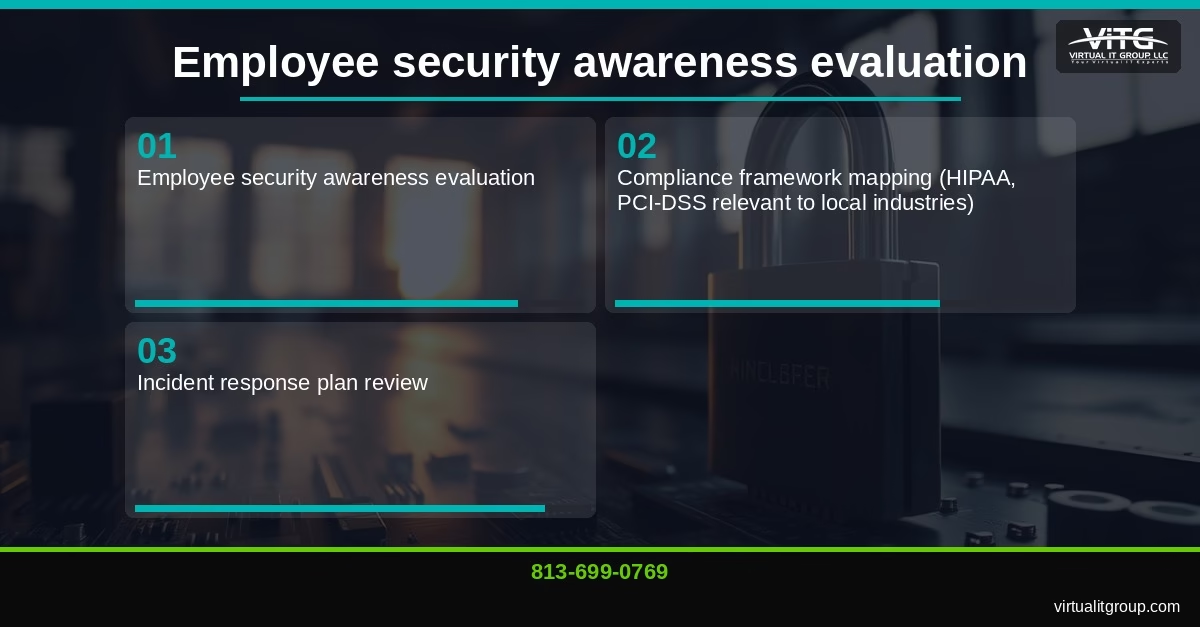
Step 3: Employee Security Awareness Evaluation — Human factors account for 95% of successful cyberattacks according to NIST guidelines. We assess current training programs and conduct simulated phishing campaigns to measure real-world security awareness levels.
Step 4: Compliance Framework Mapping — Central Florida businesses often operate under multiple compliance requirements. We map current practices against relevant frameworks including HIPAA for healthcare, PCI-DSS for payment processing, and SOX for publicly traded companies.
Step 5: Incident Response Plan Review — We evaluate existing incident response procedures, test communication protocols, and assess recovery capabilities. The average ransomware recovery time for businesses without proper backup is 23 days — with proper backup, it’s under 4 hours.
Step 6: Documentation and Reporting Standards — Comprehensive documentation is crucial for both compliance and future security efforts. We review current documentation practices and provide templates for ongoing security management.
Step 7: Remediation Priority Matrix — We conclude each audit with a prioritized action plan, categorizing findings by risk level and providing realistic timelines for remediation efforts.
How Much Does a Cybersecurity Audit Cost for Small Businesses in Central Florida?
Cybersecurity audit costs vary significantly based on company size, network complexity, and industry requirements. For Central Florida small businesses, expect to invest between $5,000-$15,000 for a comprehensive audit, with larger organizations potentially reaching $25,000-$50,000.
Several factors influence pricing: number of employees (affects endpoint assessment scope), network complexity (multiple locations increase costs), industry-specific compliance requirements (healthcare and financial services require additional testing), and current security maturity level (organizations with existing security measures require less foundational work).
The ROI calculation is straightforward when compared to breach costs. A 30-person medical practice in Clearwater was hit with ransomware on a Friday afternoon. Because they had our managed backup solution, we restored all 47,000 patient records in 3.5 hours with zero data loss. Without proper preparation, this incident could have cost $500,000+ in downtime, recovery efforts, and regulatory fines.
Many businesses also see immediate insurance benefits. Cyber liability insurance premiums can decrease by 10-25% after completing a professional audit and implementing recommended improvements. Some insurers now require annual audits for coverage renewal, making the audit cost a necessary business expense rather than an optional investment.
Common Cybersecurity Vulnerabilities Found in Dover and Gibsonton Business Networks?
Smaller Central Florida communities like Dover and Gibsonton often face unique cybersecurity challenges due to limited IT resources and reliance on consumer-grade technology solutions. Through our audit work in these areas, we’ve identified consistent vulnerability patterns that put local businesses at risk.
Outdated Software and Unpatched Systems represent the most common vulnerability we encounter. Approximately 70% of Dover-area businesses we audit are running software that’s at least six months behind on security patches. This delay creates exploitable vulnerabilities that cybercriminals actively target.
Weak Password Policies and Lack of Multi-Factor Authentication remain pervasive issues. “The biggest mistake I see Tampa Bay businesses make is assuming their IT company is handling security. In 60% of the new client assessments we do, basic protections like MFA aren’t even enabled,” notes Brian Truman, CEO of Virtual IT Group.
Unsecured Remote Access Points have proliferated since 2020, with many businesses implementing quick remote work solutions without proper security controls. We regularly find VPN configurations that haven’t been updated since initial deployment, creating persistent security gaps.
Inadequate Backup and Disaster Recovery Plans affect nearly 80% of small businesses we audit. Many organizations have backup systems but haven’t tested restore procedures, leaving them vulnerable during actual incidents.
Insider Threat Vulnerabilities often stem from excessive user permissions and lack of access controls. Employees frequently retain access to systems they no longer need, creating unnecessary risk exposure.
Choosing the Right Cybersecurity Audit Partner in the Tampa Bay Area?
Selecting a qualified cybersecurity audit provider requires careful evaluation of credentials, experience, and local market knowledge. The audit quality directly impacts your security posture and compliance status, making provider selection a critical business decision.
Essential certifications include CompTIA Security+, CISSP (Certified Information Systems Security Professional), CISA (Certified Information Systems Auditor), and relevant vendor certifications from Microsoft, Cisco, or other technology partners. These credentials demonstrate technical competency and ongoing professional development.
Key questions for potential audit providers include: How many audits have you completed in our industry? Can you provide references from similar-sized businesses? What tools and methodologies do you use? How do you handle sensitive data during the audit process? What post-audit support do you provide?
Local providers offer distinct advantages over national firms, including understanding of regional business practices, knowledge of local compliance requirements, and ability to provide ongoing support. Virtual IT Group’s 20-year track record in Tampa Bay includes relationships with local legal firms, insurance providers, and regulatory bodies that enhance our audit effectiveness.
Post-audit support is equally important as the initial assessment. Look for providers who offer remediation assistance, ongoing monitoring services, and annual audit scheduling to maintain security posture over time.
Post-Audit Action Plan: Implementing Security Improvements in Dade City and Beyond?
Converting audit findings into actionable security improvements requires structured planning and realistic timelines. The most effective approach prioritizes remediation based on risk levels while considering budget constraints and operational requirements.
Critical vulnerabilities requiring immediate attention typically include unpatched systems with known exploits, missing multi-factor authentication on administrative accounts, and inadequate backup procedures. These items should be addressed within 30 days of audit completion.
Medium-risk items such as employee training programs, policy updates, and network segmentation improvements can be scheduled over 60-90 day timelines. Lower-risk enhancements like documentation updates and procedure refinements can be implemented over 6-12 months.
Budget planning should allocate 60% of security spending to critical items, 30% to medium-risk improvements, and 10% to ongoing maintenance and monitoring. This distribution ensures maximum risk reduction while maintaining sustainable security operations.
Annual audit scheduling creates continuous improvement cycles and maintains compliance with evolving regulations. Most Dade City and Central Florida businesses benefit from annual comprehensive audits supplemented by quarterly focused assessments on high-risk areas.
Frequently Asked Questions
How long does a cybersecurity audit take for a typical Lakeland business?
A comprehensive cybersecurity audit for a typical 20-50 employee Lakeland business requires 2-3 weeks from initiation to final report delivery. The actual on-site assessment usually takes 3-5 days, with additional time needed for network scanning, documentation review, and report preparation. Larger organizations or those with complex compliance requirements may require 4-6 weeks for complete evaluation.
What cybersecurity compliance requirements apply to Polk County businesses?
Polk County businesses must comply with federal regulations based on their industry and data handling practices. Healthcare organizations must meet HIPAA requirements, financial services companies face PCI-DSS standards, and any business handling personal information should consider Florida’s Personal Information Protection Act. Additionally, businesses working with government contracts may need to comply with NIST cybersecurity frameworks or CMMC requirements.
Can Virtual IT Group perform remote cybersecurity audits for Tampa Bay companies?
Yes, we offer hybrid audit approaches that combine remote assessment capabilities with on-site verification when necessary. Remote audits can effectively evaluate network configurations, policy documentation, and cloud security settings. However, physical security assessments, employee interviews, and certain compliance requirements still require on-site presence. We customize our approach based on each client’s specific needs and compliance requirements.
What’s the difference between a cybersecurity audit and a vulnerability assessment?
A vulnerability assessment focuses primarily on technical weaknesses in systems and networks, typically using automated scanning tools to identify known security flaws. A cybersecurity audit is much more comprehensive, examining policies, procedures, employee training, compliance status, incident response capabilities, and business continuity plans in addition to technical vulnerabilities. Audits provide a holistic view of your security posture, while assessments offer detailed technical findings.
How often should Central Florida businesses conduct cybersecurity audits?
Most Central Florida businesses should conduct comprehensive cybersecurity audits annually, with quarterly focused assessments on high-risk areas or after significant system changes. Organizations in regulated industries like healthcare or finance may require more frequent audits based on compliance requirements. Businesses experiencing rapid growth, implementing new technologies, or operating in high-risk industries should consider semi-annual comprehensive audits.
Protecting your Lakeland business from cyber threats requires more than basic security measures — it demands a comprehensive understanding of your risk profile and systematic approach to vulnerability management. Virtual IT Group, LLC has spent 20 years helping Tampa Bay businesses navigate complex cybersecurity challenges, and our audit services provide the foundation for effective security programs. Don’t wait for a security incident to reveal your vulnerabilities. Contact our team at 813-699-0769 to schedule your comprehensive cybersecurity audit and take the first step toward protecting your business, your customers, and your reputation in the digital age.