
Why Ransomware Is a Critical Threat for Wesley Chapel Small Businesses
Ransomware protection is no longer optional for small businesses in Wesley Chapel — it’s a survival requirement. Across the Tampa Bay region, cybercriminals are increasingly targeting small and mid-sized businesses because they know these organizations often lack the dedicated security teams that larger enterprises maintain. For Wesley Chapel business owners, understanding this threat landscape is the first step toward building a resilient defense.
Small businesses are prime targets precisely because attackers perceive them as having weaker security postures. According to the Cybersecurity and Infrastructure Security Agency (CISA), ransomware attacks against small businesses have surged dramatically, with threat actors deploying increasingly sophisticated techniques to encrypt critical data and demand payment. Learn more about cybersecurity tips for Plant City small businesses.
The financial impact is staggering. The average ransomware recovery cost for a small business now exceeds $200,000 when you factor in downtime, data recovery, legal fees, and reputational damage. For many Wesley Chapel businesses operating on tight margins, a single attack can be existential. With over 40 years of experience protecting Tampa Bay businesses, our team at Virtual IT Group has watched this threat evolve from a rare nuisance to the single most destructive cybersecurity risk facing local SMBs.
The Rising Threat Landscape in Florida
Florida consistently ranks among the top states in the nation for ransomware incidents. The FBI’s Internet Crime Complaint Center (IC3) regularly reports Florida as a top-five state for cybercrime losses, with billions of dollars lost annually. Healthcare practices, legal firms, and professional services companies — sectors heavily represented in the Wesley Chapel and greater Pasco County area — are particularly vulnerable targets.
Wesley Chapel’s proximity to the Tampa metro area makes it especially attractive to threat actors. Cybercriminals frequently scan networks across entire metropolitan regions, and businesses in growing suburban corridors like Wesley Chapel often appear as softer targets compared to downtown Tampa enterprises with larger security budgets. The rapid commercial growth in the area means new businesses are coming online frequently, sometimes before adequate security measures are in place.
Cost of Ransomware Attacks vs. Prevention Investment
For small businesses in the Pasco County area, the math is clear: prevention costs a fraction of what recovery demands. Average downtime during a ransomware attack ranges from 7 to 21 days, and for a business generating $5,000 to $50,000 in daily revenue, the losses compound quickly. Add data recovery expenses, potential legal liability under Florida law, and the intangible cost of lost customer trust, and the total impact is devastating.
By contrast, comprehensive ransomware protection typically costs between $150 and $500 per month for most Wesley Chapel SMBs — a modest investment that delivers enormous return. Businesses that invest proactively in layered security, employee training, and tested backup strategies reduce their risk of a successful ransomware attack by over 90%, according to research from the National Institute of Standards and Technology (NIST).
What Are the Core Ransomware Protection Strategies Every Wesley Chapel Business Needs?
Businesses in Wesley Chapel need a multi-layered ransomware defense that combines advanced technology, well-defined processes, and ongoing employee education. No single tool or product can stop ransomware on its own — effective protection requires multiple overlapping safeguards that work together to detect, prevent, and recover from attacks.
The best ransomware protection strategies are tailored to your specific business type, size, and industry. A dental practice in Wesley Chapel faces different compliance requirements and threat vectors than a logistics company or law firm. What remains consistent is the need for a comprehensive approach that addresses every stage of the attack lifecycle — from initial phishing email to potential data exfiltration.
Florida’s data protection requirements add another layer of complexity. Every ransomware protection plan for a Wesley Chapel business must account for state-level compliance obligations, which we’ll discuss in more detail below.
Advanced Endpoint Protection and Detection
Endpoint Detection and Response (EDR) solutions are the cornerstone of modern ransomware defense. Unlike traditional antivirus software that relies on known malware signatures, EDR platforms use behavioral analysis to identify suspicious activity in real time — catching zero-day threats that signature-based tools miss entirely.
We deploy EDR solutions that integrate seamlessly with Microsoft Defender for Endpoint and other Microsoft security tools, providing comprehensive coverage across desktops, laptops, servers, and mobile devices. As a Microsoft Partner, Virtual IT Group ensures these tools are configured properly and monitored 24/7. Real-time threat monitoring means that when ransomware attempts to execute on any endpoint in your network, automated containment kicks in within seconds — isolating the threat before it can spread.
For Wesley Chapel businesses running hybrid environments with both on-premises and cloud infrastructure, endpoint protection must extend consistently across all platforms. Gaps in coverage are exactly what attackers exploit.
Network Segmentation and Access Controls
Network segmentation is one of the most effective strategies for limiting ransomware damage. By isolating critical systems and sensitive data into separate network segments, you prevent malware from moving laterally across your entire infrastructure if one system is compromised.
Zero-trust network architecture takes this further by requiring verification for every user, device, and connection — regardless of whether it originates inside or outside your network perimeter. Role-based access control (RBAC) ensures employees can only access the systems and data they need for their specific job functions, drastically reducing the attack surface.
We’ve seen this principle save businesses across Tampa Bay. When a single workstation gets compromised in a properly segmented network, the ransomware stays contained to that segment rather than encrypting every file server, database, and backup share on the network. The difference between a minor incident and a catastrophic breach often comes down to whether segmentation was in place.
How Should Wesley Chapel Businesses Implement Backup and Disaster Recovery?
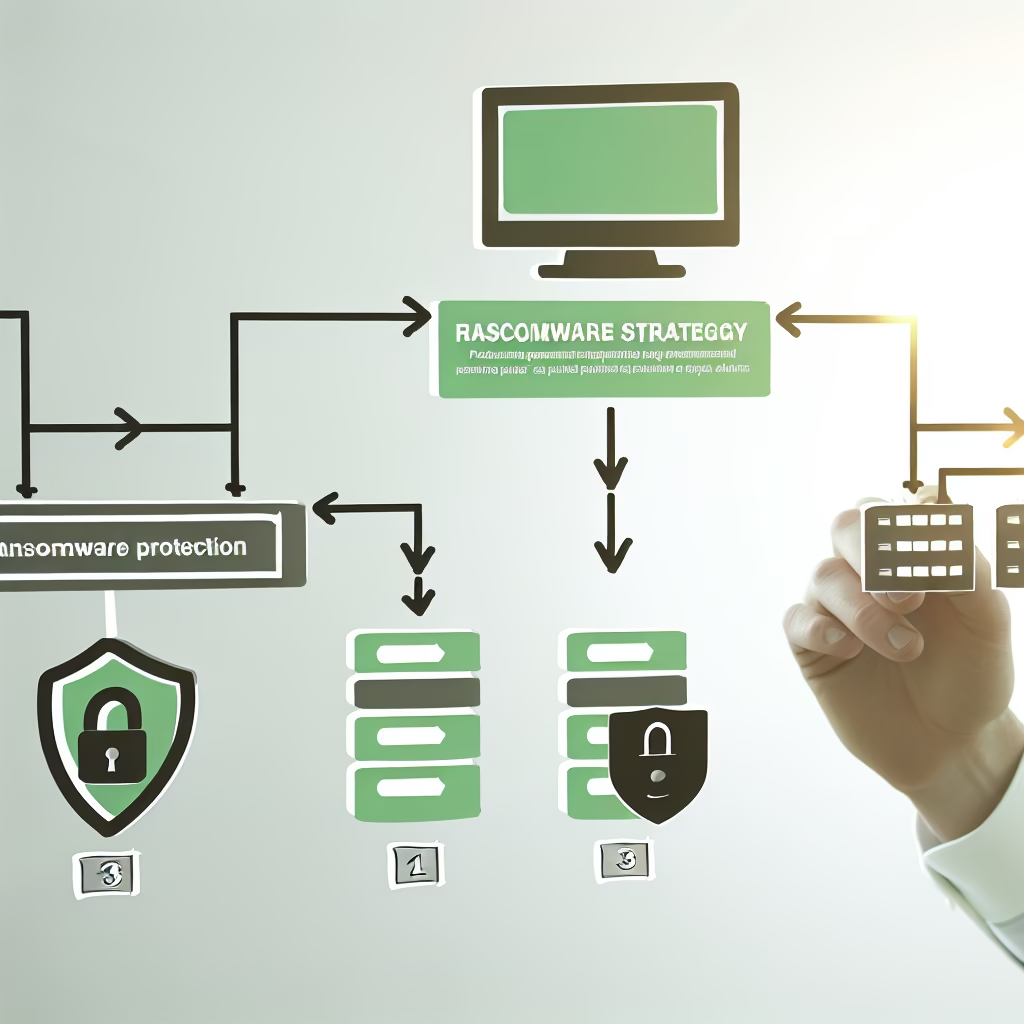
Wesley Chapel businesses should implement the 3-2-1 backup strategy as an absolute minimum: maintain three copies of critical data, stored on two different types of media, with at least one copy kept offsite and air-gapped from your production network. When combined with immutable backup technology that prevents ransomware from encrypting backup files, this approach gives you a reliable path to recovery without paying a ransom.
Backup and disaster recovery isn’t just a Wesley Chapel concern — businesses in Largo, Land O’ Lakes, and Zephyrhills share similar requirements and face the same regional threat actors. However, the specifics of your recovery plan should reflect your unique business operations, regulatory obligations, and tolerance for downtime.
Creating an Effective Backup Strategy
An effective backup strategy starts with automated daily backups that create multiple recovery points throughout the day. For businesses processing transactions, customer data, or patient records, losing even a few hours of data can be costly. We recommend recovery point objectives (RPOs) of four hours or less for critical systems.
Cloud-based backup solutions with end-to-end encryption provide secure offsite storage that ransomware cannot reach. However, cloud backups alone aren’t sufficient for rapid recovery — the time required to download large datasets over an internet connection can extend your downtime significantly. That’s why we pair cloud backups with local backup appliances that enable quick bare-metal restores.
Perhaps most importantly, backup integrity must be tested monthly at minimum. We’ve encountered situations where businesses believed they had solid backups, only to discover during an actual incident that backup jobs had been failing silently for weeks. Regular test restores verify that your backups are complete, uncorrupted, and actually recoverable.
Disaster Recovery Planning and Testing
A backup without a tested recovery plan is just a file sitting on a drive. Every Wesley Chapel business needs documented disaster recovery procedures that define clear RPO and RTO (Recovery Time Objective) targets for each critical system. Your staff should know exactly what to do, who to contact, and in what order systems should be restored.
We recommend quarterly disaster recovery drills that simulate realistic ransomware scenarios. These drills expose gaps in your recovery process before a real attack reveals them at the worst possible moment. Communication plans are equally important — your team, customers, vendors, and potentially regulators all need to be notified through predetermined channels.
Third-party validation of recovery capabilities adds an extra layer of confidence. Having an independent managed IT provider like Virtual IT Group audit and test your disaster recovery and business continuity planning ensures nothing is overlooked by the same team that built the systems.
Local Angle: How Wesley Chapel and Tampa Bay Businesses Face Unique Ransomware Risks
Wesley Chapel’s business landscape creates a distinct risk profile that generic cybersecurity advice doesn’t fully address. The area’s rapid growth, driven by an influx of healthcare practices, professional services firms, and technology startups, means many businesses are scaling their IT infrastructure quickly — sometimes faster than their security measures can keep pace.
Florida’s concentration of healthcare providers makes the state a magnet for ransomware groups that specialize in targeting protected health information (PHI). Wesley Chapel and surrounding communities in Pasco County are home to dozens of medical and dental practices, urgent care centers, and specialty clinics — all of which must comply with both HIPAA and state-level data protection laws.
The proximity to Tampa’s port and shipping industry also creates indirect risk. Threat actors targeting logistics and supply chain operations frequently scan IP ranges across the entire Tampa Bay metro, including Wesley Chapel, Largo, and Zephyrhills. Businesses that share networks with vendors in these industries face elevated exposure. Compared to businesses in neighboring communities, Wesley Chapel’s professional services concentration means that data-rich targets — law firms, accounting practices, insurance agencies — are especially prevalent here.
Florida-Specific Compliance Requirements
The Florida Information Protection Act (FIPA) imposes specific obligations on any business that handles personal information of Florida residents. Under FIPA, businesses must notify affected individuals within 30 days of discovering a data breach — one of the shorter notification windows in the country.
Healthcare providers face additional requirements under Florida Statute 456.057, which governs the confidentiality of medical records. Penalties for non-compliance with Florida’s data protection laws can exceed $100,000 per incident, and businesses may face civil liability from affected individuals as well.
These compliance requirements make proactive ransomware protection not just a security best practice but a legal obligation. Working with a managed IT provider that understands Florida-specific regulations is essential for Wesley Chapel businesses that want to avoid both cyber attacks and regulatory penalties.
What Role Does Employee Training Play in Ransomware Prevention?
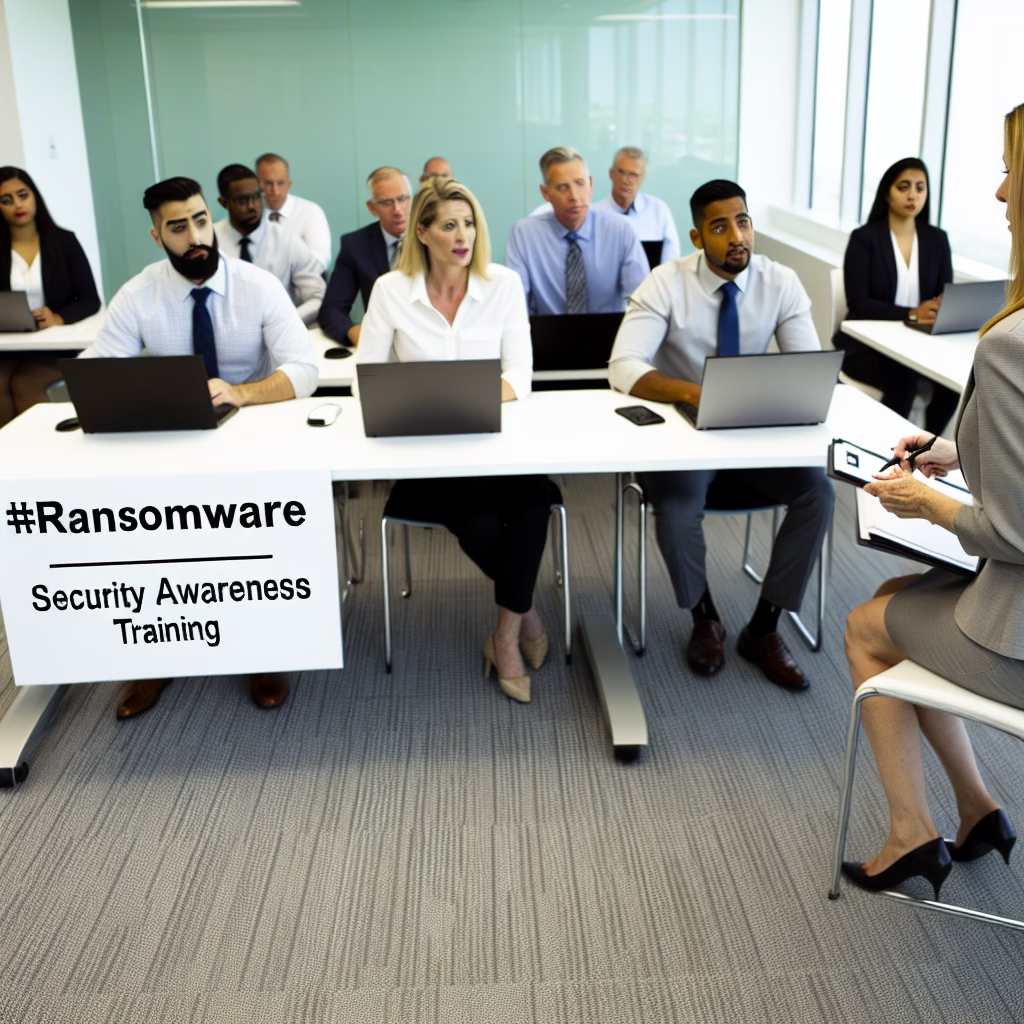
Employee training is the single most impactful ransomware prevention measure a Wesley Chapel business can implement. Human error remains the leading cause of ransomware infections, with phishing emails responsible for the majority of successful attacks. Research from the SANS Institute demonstrates that ongoing security awareness training reduces the likelihood of employees clicking on malicious links by more than 70%.
One-time training sessions don’t work. Effective security education requires continuous reinforcement through simulated phishing campaigns, monthly micro-learning modules, and regular updates about emerging threat tactics. The goal is to build a security-first culture where every employee — from the front desk to the executive suite — sees themselves as a critical line of defense.
Phishing Awareness and Email Security
Every employee should be able to recognize the hallmarks of a phishing email: unexpected sender addresses, urgency language, suspicious links, and unusual attachment types. But training alone isn’t enough. Technical controls like advanced email filtering, DMARC/DKIM/SPF authentication, and multi-factor authentication (MFA) on all email accounts create layers that catch threats even when human judgment fails.
Equally important is establishing a clear, blame-free reporting mechanism for suspicious messages. When employees feel safe reporting a potential phishing email without fear of reprimand, threats get identified and neutralized faster. We help our Wesley Chapel clients implement phishing simulation programs that track improvement over time and identify employees who need additional coaching.
Security Incident Response Planning
Every Wesley Chapel business needs a documented incident response plan that employees can follow when something goes wrong. This plan should define clear communication chains — who gets notified first, how the IT team or managed service provider is contacted, and when law enforcement should be engaged.
The FBI encourages all ransomware victims to file reports through IC3 and recommends against paying ransoms, though each situation requires careful evaluation. Legal counsel should be consulted before making any payment decisions, as there are federal regulations that can make certain ransom payments illegal depending on the threat actor involved.
Having this plan documented, distributed, and rehearsed before an attack occurs is what separates businesses that recover quickly from those that spiral into chaos. Our team helps clients across Tampa Bay build and test incident response plans tailored to their specific environments and risk profiles.
How Can Wesley Chapel Businesses Get Started with Ransomware Protection Today?
Wesley Chapel businesses should start with a comprehensive security assessment of their current posture — identifying gaps, prioritizing critical assets, and building a realistic implementation roadmap. You don’t need to overhaul everything overnight, but you do need to start with a clear picture of where you stand and where your biggest vulnerabilities lie.
Partnering with a trusted managed IT services provider accelerates this process dramatically. Virtual IT Group brings CompTIA Partner and Microsoft Partner credentials to every engagement, along with four decades of experience serving Tampa Bay businesses across healthcare, legal, financial, and professional services sectors. We provide managed IT services for Tampa Bay businesses that include continuous monitoring, threat intelligence, and proactive security management.
The implementation roadmap should be tailored to your business size, industry, and budget. A five-person accounting firm in Wesley Chapel has different needs than a 50-employee medical practice, but both deserve enterprise-grade protection at a price point that makes sense.
Conducting a Ransomware Risk Assessment
A proper ransomware risk assessment follows a structured methodology. We use Virtual IT Group’s 5-Point Security Assessment Framework for Tampa Bay Businesses, which evaluates five critical domains:
- Asset Identification: Cataloging all critical systems, data repositories, and dependencies to understand what needs the most protection.
- Control Evaluation: Assessing existing security controls — firewalls, endpoint protection, access management, encryption — against current best practices and NIST Cybersecurity Framework standards.
- Gap Analysis: Identifying specific weaknesses that ransomware operators would exploit, ranked by severity and likelihood.
- Prioritized Remediation Plan: Creating a phased implementation roadmap that addresses the highest-risk gaps first while staying within your budget constraints.
- Ongoing Validation: Establishing continuous monitoring, quarterly reassessments, and regular penetration testing to ensure defenses remain effective as threats evolve.
This framework gives Wesley Chapel business owners a clear, actionable path from assessment to protection — not a vague set of recommendations that gather dust in a folder. Every finding comes with specific remediation steps, cost estimates, and timelines so you can make informed decisions about your comprehensive cybersecurity solutions.
Frequently Asked Questions About Ransomware Protection
How much does ransomware protection cost for a small business in Wesley Chapel?
Ransomware protection for Wesley Chapel small businesses typically ranges from $150 to $500 per month for comprehensive managed security services, depending on the number of endpoints, complexity of your network, and industry-specific compliance requirements. This investment covers endpoint detection and response, backup management, security monitoring, and employee training. When compared to average ransomware recovery costs exceeding $200,000, the return on investment is substantial. Virtual IT Group offers customized packages that scale to fit businesses of all sizes across Pasco County and the greater Tampa Bay area.
Can my backups protect me from ransomware attacks?
Backups are critical to ransomware recovery, but only if they’re properly implemented with immutable storage and air-gapped copies that ransomware cannot reach. Standard backups that remain connected to your network or accessible from infected systems can be encrypted right alongside your production data — rendering them useless during an attack. A true 3-2-1 backup strategy with at least one immutable, offsite copy ensures you maintain a clean recovery point. Regular monthly test restores are essential to verify that your backups are actually recoverable when you need them most.
What should I do immediately if my Wesley Chapel business is hit by ransomware?
The first step is to isolate infected systems by disconnecting them from the network — pull Ethernet cables and disable Wi-Fi to prevent the ransomware from spreading to additional devices. Preserve all evidence by not wiping or rebooting affected machines. Contact your managed IT provider or internal IT team immediately, and document everything you observe including ransom messages, affected systems, and timestamps. Report the incident to the FBI through IC3 and consult with legal counsel before making any decisions about ransom payment. Having a documented incident response plan in place before an attack occurs makes these critical first minutes far more effective.
Is ransomware protection required by Florida law for small businesses?
While Florida doesn’t mandate a specific ransomware protection product or standard for all businesses, the Florida Information Protection Act (FIPA) requires any business handling personal information of Florida residents to implement “reasonable measures” to protect that data. Healthcare providers face additional obligations under both HIPAA and Florida Statute 456.057. Financial services firms must comply with federal regulations like the Gramm-Leach-Bliley Act. Failure to maintain adequate security measures can result in fines exceeding $100,000 per incident under FIPA, plus civil liability from affected individuals. In practice, this means comprehensive ransomware protection is effectively a legal requirement for most Wesley Chapel businesses.
How does ransomware protection differ for businesses in Land O’ Lakes versus Wesley Chapel?
The core ransomware protection strategies — endpoint detection, backup and recovery, employee training, and network segmentation — are fundamentally the same across the Tampa Bay region. However, the specific implementation varies based on industry concentration. Land O’ Lakes has a higher proportion of agricultural and equestrian businesses with operational technology considerations, while Wesley Chapel’s professional services concentration means a heavier focus on data protection and compliance. Zephyrhills businesses often deal with manufacturing and distribution environments that require specialized industrial control system security. Virtual IT Group tailors every protection plan to the specific industry, regulatory environment, and operational needs of each client regardless of location.
Protect Your Wesley Chapel Business from Ransomware — Start Today
Ransomware threats aren’t slowing down, and Wesley Chapel businesses that delay protection are gambling with their livelihoods. The strategies outlined in this guide — layered endpoint security, immutable backups, network segmentation, employee training, and incident response planning — form a proven defense framework that dramatically reduces your risk.
Virtual IT Group has spent over 40 years protecting businesses across Tampa Bay, and we understand the specific challenges that Wesley Chapel and Pasco County businesses face. As a CompTIA Partner and Microsoft Partner, we bring enterprise-grade expertise to small and mid-sized businesses at a price point that makes sense.
Don’t wait for an attack to expose your vulnerabilities. Schedule a free security assessment with Virtual IT Group and get a customized ransomware protection plan built specifically for your Wesley Chapel business. Our team will identify your biggest risks, recommend prioritized solutions, and help you implement defenses that keep your data, your customers, and your business safe.