

Hybrid work models for roofing companies in Tampa Bay are quickly becoming an integral part of the industry in 2025. As businesses strive to stay competitive in the evolving job market, adopting flexible work environments is necessary. The shift towards hybrid models allows roofing companies to balance office-based administrative tasks with on-site fieldwork, improving operational efficiency and increasing employee retention rates.
As the roofing industry faces challenges such as workforce shortages and rising competition, hybrid work models offer a flexible solution that meets the growing demand for digital tools and better work-life balance. In this article, we’ll explore the numerous benefits of hybrid work models for roofing companies, particularly in Tampa Bay, and provide actionable strategies to successfully implement hybrid work.
Table of Contents
- What Are Hybrid Work Models for Roofing Companies?
- Why Are Hybrid Work Models Important for Roofing Companies?
- Top 5 Benefits of Hybrid Work Models for Roofing Companies
- Increased Productivity and Efficiency
- Enhanced Employee Retention
- Cost Savings
- Better Work-Life Balance
- Scalability and Flexibility
- How Hybrid Work Models Improve Roofing Operations
- Challenges of Implementing Hybrid Work in Roofing
- Implementing Hybrid Work Models in Your Roofing Company
- Key Technologies and Tools for Effective Hybrid Work in Roofing
- The Future of Hybrid Work Models in the Roofing Industry
- How ViTG’s Hybrid Work Model Solution Helps Roofing Industry
- 24/7 IT Support for Seamless Operations
- Scalable IT Solutions for Growing Roofing Businesses
- Cloud-Based Collaboration Tools for Consistent Communication
- Enhanced Cybersecurity to Protect Sensitive Data
- Cost-Effective IT Solutions for Improved Budget Management
- Proactive IT Management to Prevent Downtime
- Simplified Integration of IT Solutions Across Teams
- Conclusion
- Frequently Asked Questions (FAQs)
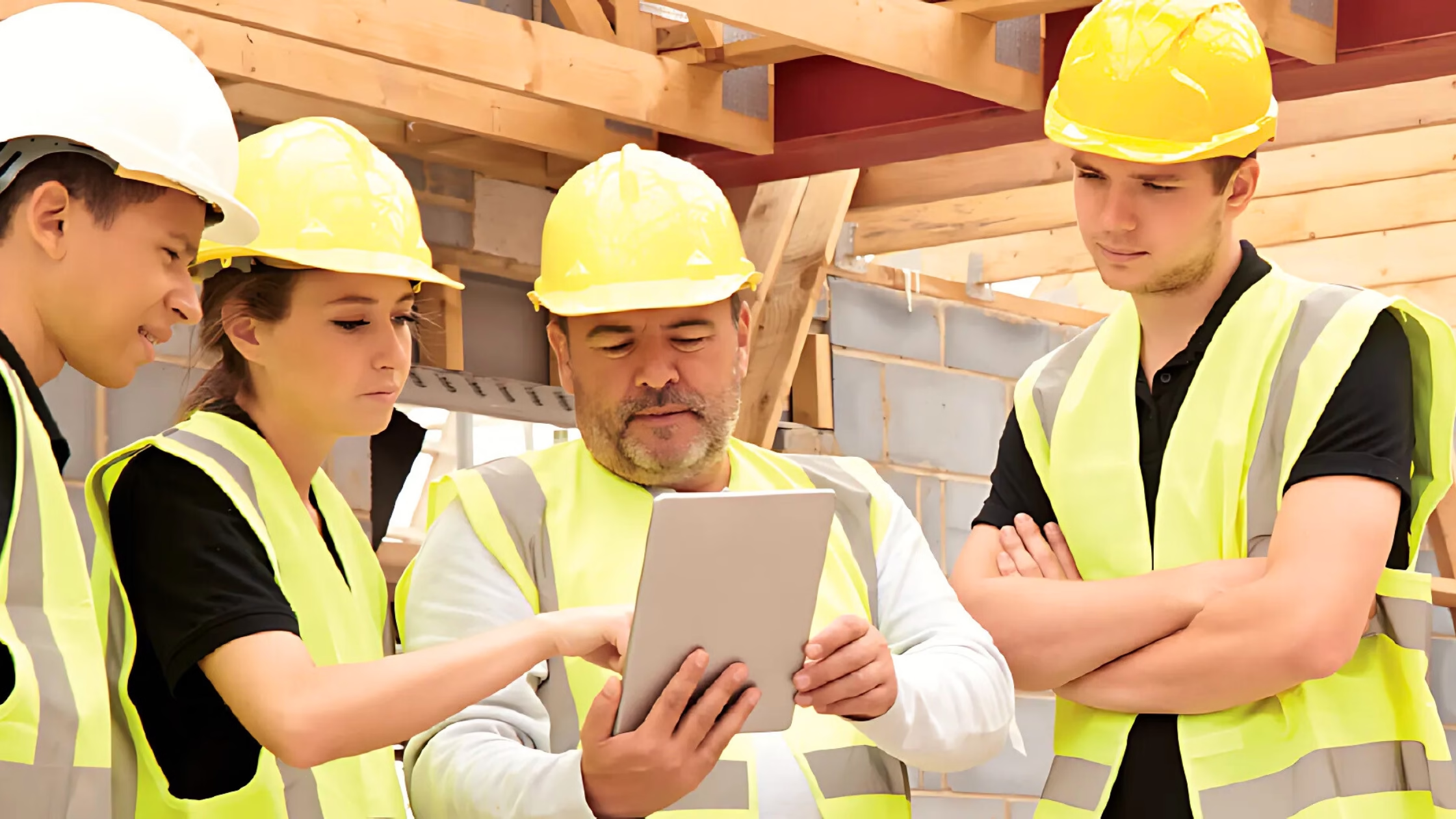
Hybrid Work Models for Roofing Companies in Tampa Bay: The New 2025 Norm to Improve Operations and Employee Retention
What Are Hybrid Work Models for Roofing Companies?
Hybrid work models for roofing companies combine both in-office and remote work, with employees working part of the time in the office and part of the time remotely. For roofing companies, this typically means that administrative staff, project managers, salespeople, and other office-based employees can work from home or other remote locations while field teams continue to work on job sites. This flexibility allows for a smoother workflow, greater employee satisfaction, and enhanced productivity.
The model helps roofing companies remain competitive by adopting technology and offering employees a balance between flexibility and the necessary physical presence required for field operations.
Why Hybrid Work Models Matter for Roofing Companies
Roofing companies in Tampa Bay are increasingly adopting hybrid work models to overcome industry challenges such as workforce shortages, high turnover rates, and the demand to stay competitive. As Tampa Bay is one of the fastest-growing regions in Florida, the demand for roofing services has surged. With the increase in competition, roofing companies must improve operational efficiency, reduce costs, and attract talent.
Hybrid work models not only benefit office staff but also offer an opportunity to streamline administrative processes, project management, and customer communication. By adopting this flexible model, Tampa Bay roofing companies can improve employee satisfaction, reduce operational costs, and enhance their ability to scale quickly during peak seasons.
Top 5 Benefits of Hybrid Work Models for Roofing Companies
1. Increased Productivity and Efficiency
Hybrid work models enable roofing companies to improve operational efficiency. Office-based employees, such as project managers and customer service representatives, can focus on core tasks without the distractions of an office environment. Cloud-based systems and project management tools enable employees to collaborate effectively, even while working remotely.
For field staff, having streamlined communication tools ensures seamless collaboration, reducing the chances of miscommunication and delays.
Actionable Tip: Roofing companies can use project management software like Buildertrend, which integrates field teams and office workers in real-time, improving workflow efficiency.
2. Enhanced Employee Retention
Employee retention is a major concern in the roofing industry, especially as skilled workers are in high demand. By implementing hybrid work models, roofing companies can offer greater flexibility and work-life balance, leading to increased job satisfaction and reduced turnover. Employees in office roles, like estimators and administrative staff, can enjoy a more balanced work schedule, which in turn leads to higher job satisfaction.
Actionable Tip: Roofing companies can offer flexible workdays and provide employees with technology and support to facilitate their remote work experience, making the hybrid model a long-term retention tool.
3. Cost Savings
One of the biggest advantages of hybrid work models is cost savings. By reducing the requirement for large office spaces and overhead costs associated with a traditional in-office model, roofing companies can reallocate resources into other key areas, such as tools, materials, and hiring field staff.
Actionable Tip: Roofing businesses should consider reducing office space by switching to shared or smaller offices, investing in technology instead of physical infrastructure, and providing remote work tools like virtual desktops and cloud solutions.
4. Better Work-Life Balance
Employees in the roofing industry often struggle with long hours, physically demanding work, and a lack of flexibility. By adopting hybrid work models, roofing companies can offer office staff the ability to work from home, creating a better balance between their professional and personal lives.
Actionable Tip: Ensure that remote work options are not only for office-based staff but also for roles that involve planning and coordinating projects. Providing flexibility in scheduling can help improve employee retention and overall morale.
5. Scalability and Flexibility
Hybrid work models provide roofing companies the flexibility to scale their operations up or down according to demand. In peak roofing seasons, office teams can increase their work hours or bring in temporary help without the requiring for a long-term commitment. This scalability ensures roofing companies can respond quickly to new opportunities or projects.
Actionable Tip: Utilize cloud-based systems and remote work tools that allow the workforce to scale and respond to busy periods. Flexibility in staffing ensures your team remains responsive to seasonal changes in demand.

Hybrid Work Models for Roofing Companies in Tampa Bay: The New 2025 Norm to Improve Operations and Employee Retention
How Hybrid Work Models Improve Roofing Operations
Hybrid work models can transform the way roofing companies operate, especially in managing office and field workers. By reducing the physical presence required in the office, roofing companies can optimize their resources. This results in streamlined workflows, improved project management, and real-time tracking of work progress on-site.
Hybrid models also enhance collaboration between field teams and office-based staff, improving communication and overall project execution. Office workers can share real-time data, project updates, and invoices with field teams without having to be on-site.
Challenges of Implementing Hybrid Work in Roofing
Despite the many benefits, implementing hybrid work models in the roofing industry comes with some challenges. For example, remote work solutions may not be suitable for all employees, especially those who require hands-on involvement in field projects.
Roofing companies must ensure that communication and operational systems are integrated across both remote and on-site staff. There may also be technology hurdles to overcome, such as ensuring reliable internet connections in remote work areas and providing the necessary software tools to field staff.
Implementing Hybrid Work Models in Your Roofing Company
To successfully implement hybrid work models in your roofing business, follow these essential steps:
- Create a Clear Policy – Define roles that are eligible for hybrid work and establish expectations for remote and on-site workers.
- Leverage Cloud-Based Tools – Implement cloud-based tools like Microsoft 365 or Google Workspace to streamline communication and collaboration.
- Invest in Cybersecurity – Ensure that remote workers can access your company’s systems securely by investing in VPNs and multi-factor authentication.
- Encourage Flexibility – Allow employees to set their schedules based on their productivity and project deadlines, which helps to reduce burnout and increase satisfaction.
Key Technologies and Tools for Effective Hybrid Work in Roofing
- Project Management Software: Roofing companies should invest in platforms like Buildertrend, which integrate office and field staff, enabling effective communication and real-time tracking.
- Time Tracking Tools: Use tools like TSheets to track field workers’ time and ensure accurate payroll processing.
- Cloud Storage Solutions: Services like Dropbox or Google Drive allow for the seamless sharing and storage of project documents between office and field teams.
The Future of Hybrid Work Models in the Roofing Industry
As the roofing industry continues to evolve, hybrid work models will play a critical role in adapting to the future of work. These models will likely become more integrated with the help of advancements in technology, AI, and automation, making it easier for businesses to manage remote teams. In the long run, hybrid work will become a competitive edge for roofing companies, helping them attract top talent and remain agile in a fast-paced industry.

Hybrid Work Models for Roofing Companies in Tampa Bay: The New 2025 Norm to Improve Operations and Employee Retention
How ViTG’s Hybrid Work Model Solution Helps Roofing Industry
At Virtual IT Group (ViTG), we understand the evolving requirements of businesses, especially in industries like roofing, where managing on-site operations and administrative tasks simultaneously can be challenging. Our hybrid work model solution is customized to help roofing companies in Tampa Bay and beyond effectively balance fieldwork with office-based functions, boosting productivity and employee retention while improving overall operations.
With over 35 years of expertise, ViTG offers the ideal combination of cloud-based solutions, flexible work strategies, and comprehensive IT support to streamline your business operations. Our managed IT services are designed to provide scalable and cost-effective solutions that align perfectly with your business processes, helping you maximize efficiency and minimize downtime.
Here’s how ViTG’s hybrid work model solutions can benefit your roofing company:
1. 24/7 IT Support for Seamless Operations
Roofing companies often experience unpredictable schedules due to weather conditions or urgent project deadlines. ViTG ensures that your IT systems are always operational, with 24/7 IT support to address any technical issues that arise. Whether your field team encounters a problem with their communication tools or your office team requires assistance with a software update, our team is always ready to provide rapid support.
Benefit for Roofing Companies: With our round-the-clock IT support, your roofing business can operate smoothly without disruption, ensuring continuous communication between your office staff and field teams.
2. Scalable IT Solutions for Growing Roofing Businesses
As your roofing company expands, so does your IT demand. ViTG offers flexible and scalable IT solutions that can grow alongside your business. Whether you seek to add more staff, implement additional cloud storage, or scale your communication tools, ViTG provides IT infrastructure that adapts to your specific goals.
Benefit for Roofing Companies: Our scalable IT services ensure that your company has the resources to grow without investing in expensive, long-term solutions. This flexibility is crucial for managing both seasonal fluctuations and unexpected growth.
3. Cloud-Based Collaboration Tools for Consistent Communication
One of the key challenges for roofing companies is ensuring effective communication between field teams and office staff. ViTG’s hybrid work model solutions include cloud-based collaboration tools like Microsoft 365, Google Workspace, and custom project management platforms, ensuring that everyone stays connected, regardless of location.
Benefit for Roofing Companies: Our cloud solutions enable your teams to share documents, manage schedules, and track project progress in real time. Whether your workers are in the field or in the office, they can access all the information they require from any device.
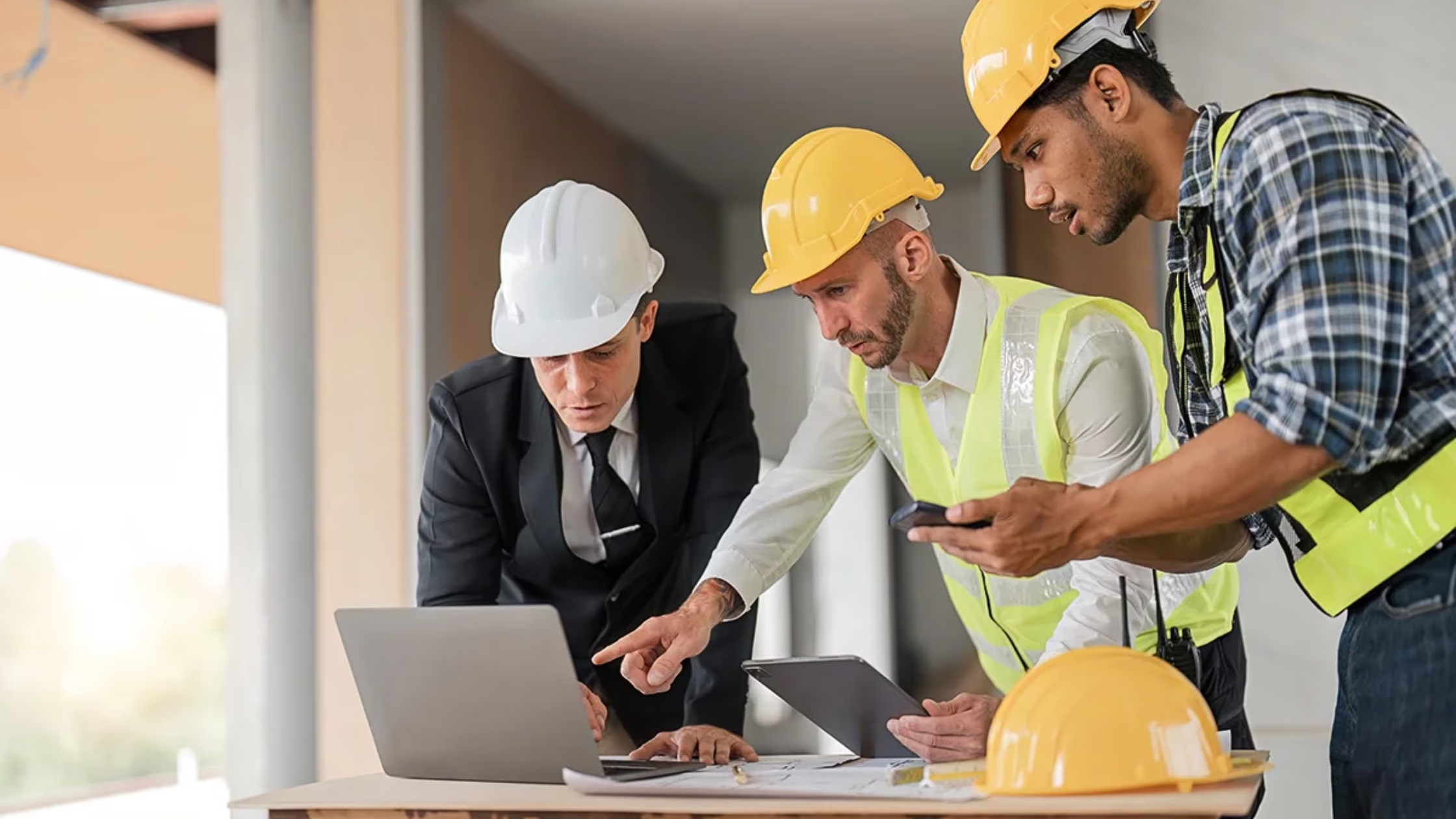
Hybrid Work Models for Roofing Companies in Tampa Bay: The New 2025 Norm to Improve Operations and Employee Retention
4. Enhanced Cybersecurity to Protect Sensitive Data
Roofing companies handle sensitive information, from client contracts and invoices to employee records and payment data. ViTG’s hybrid work model incorporates top-tier cybersecurity measures, including encryption, multi-factor authentication, and network monitoring, to protect your business from cyber threats.
Benefit for Roofing Companies: Our comprehensive cybersecurity protocols safeguard your data against cyberattacks, ensuring that sensitive client and company information is secure, even when accessed remotely by your hybrid workforce.
5. Cost-Effective IT Solutions for Improved Budget Management
Implementing a hybrid work model can reduce operational costs associated with maintaining a large office space and full-time staff. ViTG helps you adopt a more cost-effective model by providing remote IT management and scalable solutions, which allows you to only pay for the services and support you require.
Benefit for Roofing Companies: Roofing businesses can save on overhead costs by reducing the demand for large office spaces and full-time IT staff. Our flexible pricing model ensures you pay for IT support based on your priorities, not a fixed cost.
6. Proactive IT Management to Prevent Downtime
Our proactive approach to IT management means we don’t wait for problems to arise, we actively monitor your IT systems to detect issues before they impact your business. With our constant vigilance, we ensure that your IT infrastructure remains optimized, and your systems stay running smoothly, reducing the risk of costly downtime.
Benefit for Roofing Companies: With our proactive IT management, your roofing company will face fewer disruptions, allowing your field and office teams to focus on what they do best delivering quality roofing services.
7. Simplified Integration of IT Solutions Across Teams
Whether you have a remote team or an in-house office team, ViTG’s hybrid work solutions ensure that all of your IT tools and systems are integrated seamlessly. We work with your business to ensure that all devices, communication platforms, and project management systems function as one cohesive unit.
Benefit for Roofing Companies: Seamless integration of IT systems across your teams helps improve efficiency and ensures that your employees can access the tools and resources they require, whenever and wherever they seek for them.

Hybrid Work Models for Roofing Companies in Tampa Bay: The New 2025 Norm to Improve Operations and Employee Retention
Conclusion
Hybrid work models are transforming the roofing industry in Tampa Bay, enabling companies to operate more efficiently, improve employee retention, and scale effectively. ViTG’s hybrid work solutions are designed to help roofing companies navigate the future of work with ease, ensuring that your business stays competitive and adaptable in an increasingly digital world.
By leveraging our 24/7 IT support, scalable solutions, cybersecurity measures, and cost-effective models, your roofing company can focus on what truly matters—delivering excellent roofing services while maintaining a secure, efficient, and agile IT infrastructure.
Ready to succeed the future of hybrid work in your roofing company? Schedule FREE 30-minute discovery call today and visit our website learn how we can help you integrate hybrid work solutions that will improve operations, boost productivity, and secure your business.
Frequently Asked Questions (FAQs)
- What is the hybrid work model for roofing companies?
A hybrid work model allows employees to split their time between working remotely and working on-site. For roofing companies, this typically applies to office-based teams (such as project managers, estimators, and administrative staff) who can work from home or another remote location for part of the week, while field teams remain on-site to perform actual roofing work. - How can a hybrid work model improve productivity in my roofing company?
A hybrid work model can improve productivity by offering employees flexibility. Office-based employees can work uninterrupted from home, reducing commute time and increasing focus. Field workers also benefit from having easy access to project management tools and real-time collaboration with office teams, improving project coordination and efficiency. - Is the hybrid work model cost-effective for roofing companies?
Yes, the hybrid work model is cost-effective. By reducing the demand for large office spaces and allowing for remote work, roofing companies can save on overhead costs. Additionally, offering remote work options can help with employee retention and attract a wider talent pool without requiring increasing office space. - What technology do I need to implement a hybrid work model in my roofing company?
To implement a hybrid work model in a roofing company, you’ll need cloud-based project management tools, communication platforms, cybersecurity systems, and remote access technologies. Examples include tools like Microsoft 365, Google Workspace, Slack, and secure cloud storage to ensure your team can collaborate effectively from anywhere. - How do I maintain communication with my field staff using a hybrid model?
Maintaining communication with field staff in a hybrid work model requires reliable tools for real-time communication and collaboration. Mobile apps like Slack, Microsoft Teams, or custom project management tools enable seamless messaging, file sharing, and project tracking, keeping field staff in the loop with office-based teams, even when working remotely. - Can a hybrid work model be implemented for roofing field workers?
While field staff cannot work from home in a traditional sense, hybrid models can still apply by giving them access to digital tools and cloud-based resources while on the go. Field workers can access and update project information in real time, ensuring they stay connected and informed even when working at different sites. - What are the main challenges of implementing a hybrid work model in the roofing industry?
The main challenges of implementing a hybrid work model in roofing include ensuring strong communication between remote and on-site teams, providing necessary digital tools for field staff, and maintaining cybersecurity standards across all devices and locations. However, with the right IT support, these challenges can be mitigated. - How does a hybrid work model impact employee retention in the roofing industry?
Offering a hybrid work model can significantly boost employee satisfaction, as it provides greater flexibility, reduces commute time, and allows for a better work-life balance. In an industry where skilled workers are in high demand, this flexibility can improve employee retention and attract top talent. - How does the hybrid work model affect the security of my roofing company’s data?
The hybrid work model introduces potential cybersecurity risks, especially when employees are accessing company data remotely. However, implementing strong cybersecurity measures, such as VPNs, multi-factor authentication, and endpoint protection, can secure your company’s data and ensure that remote and on-site work remains safe. - Can hybrid work models improve customer service in roofing companies?
Yes, a hybrid work model can improve customer service by enabling your administrative and customer-facing staff to work more efficiently from any location. With real-time access to customer data, project updates, and team collaboration, your staff can respond more quickly to customer inquiries, provide timely updates, and resolve issues faster, all contributing to better customer satisfaction.